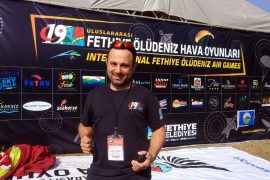
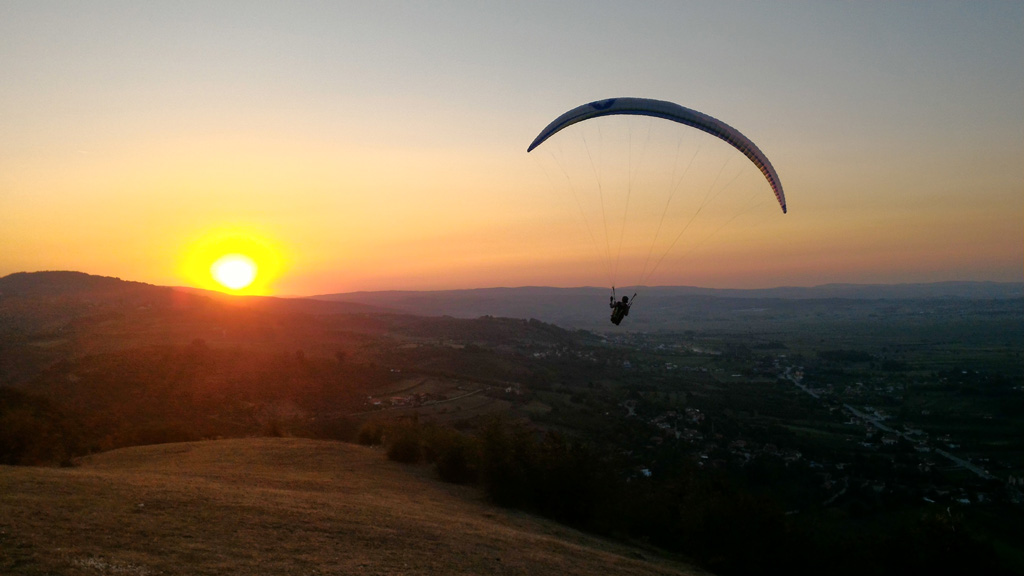
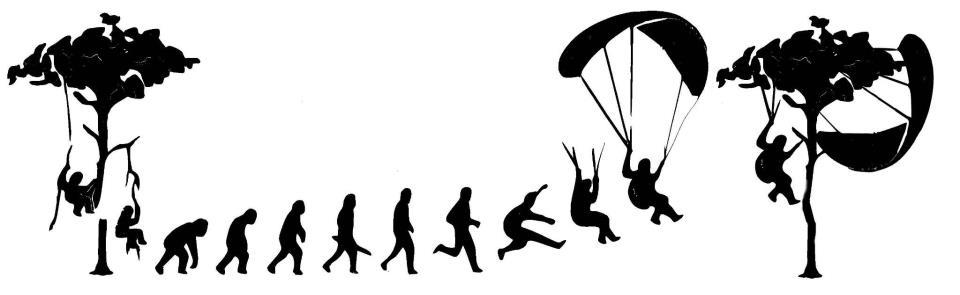
I found the answer in paragliding. In this article, I share with complete sincerity my training from scratch, the mixed excitement, fear, and freedom I felt during my first flight.
Actually, my past experience with the sky was quite limited. Apart from a few airplane trips and one military helicopter flight, my feet had never left the ground like this. I don’t exactly know the origin of my passion for heights, but there’s one thing I’m sure of: This passion definitely didn’t come from my father. He can’t even approach a balcony railing, can’t look down from 2-3 meters, and can’t even bear to look at my climbing photos. Fortunately, nature has been generous in this regard; the fear of heights wasn’t passed down from father to son.
It All Started with a “Let’s Go!”
Everything began when my colleague Hakan came one morning and said, “Paragliding training is starting, let’s go!” Hakan had already started flying; naturally, I hesitated. I tried to slow things down by saying, “Shouldn’t we do a tandem flight first to get a feel for it?” I had in mind to spread the process over time and do more research. (Tandem flight is a two-person flight on the same wing with an experienced pilot. It’s an ideal way to “taste” the sport before starting.)
Hakan kept teasing me with jokes like “Are you going to fly in someone’s lap?” and I finally gave in. We decided to join the training together. Suddenly, we found ourselves in the middle of paperwork. The first serious test of this sport was getting a health report from a committee of five specialist doctors. Hospital procedures have always been boring. While killing time in the hospital corridors, I kept thinking of making the joke “So, can I fly, doctor?” during the examination, but I didn’t want to be misunderstood and labeled as having psychological issues. In the end, we proudly put that valuable report in our pockets, which clearly stated: “Suitable for paragliding and jumping.” I must say, the expression was quite specific and appropriate; otherwise, the question of what I was suitable for would have remained open to jokes 🙂
The Training Process and First Days
On the first day of training, we went to watch the previous group who had just completed their training at the flying hill. It was our first time seeing such an environment. We were a bit scared, to be honest. Some friends said “This sport is not for me” and went home. Naturally, I also felt some fear. But in such situations, the best thing is to distance yourself from the fearful inner and outer voices. Otherwise, the brain is very good at producing excuses to make you quit. Perhaps the most important gain of the training was this: It gave us courage in a field we knew nothing about. Paragliding is not a sport you can learn by trial and error or with the help of a friend. You absolutely need help from professionals who know what they’re doing.
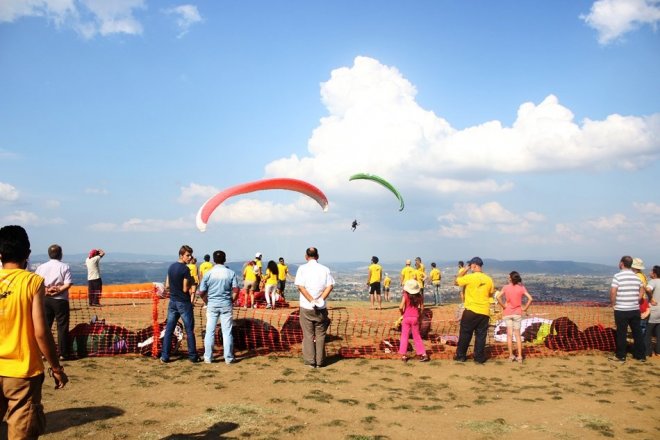
On weekends, local people also come to Kırantepe to watch the flights and do tandem flights. One nice feature of this hill is that after taking off from the launch point, you can land in the same area. They fly tandem passengers for 20-30 minutes and then land them back in the same spot. This eliminates the time loss of landing in the lower landing area and coming back by car. A beautiful flying ecosystem has been created. Weekends have a festive atmosphere…
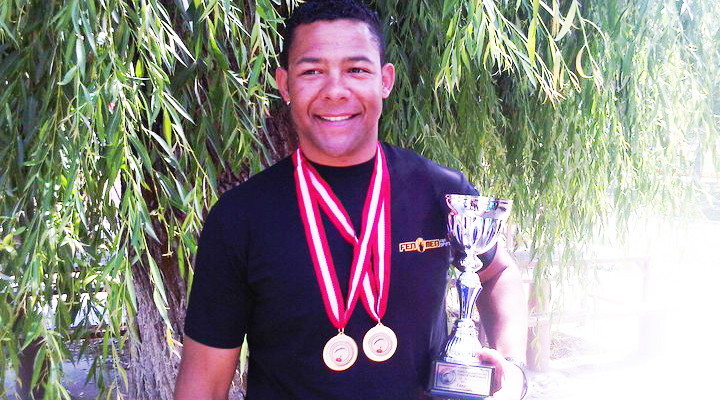
“Vecihi” Moments and Landing at the Mall
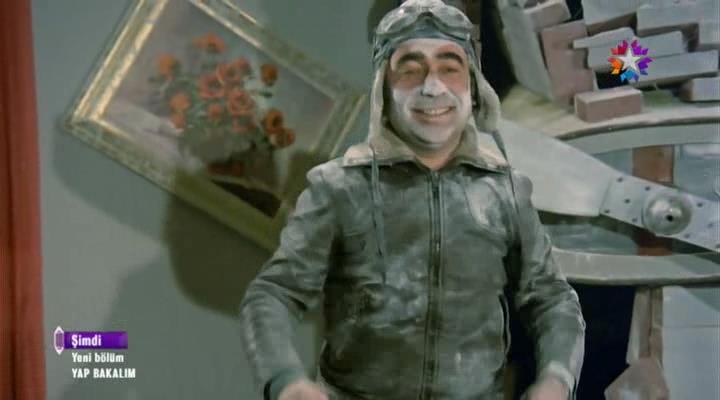
Vecihi is a legendary clumsy aviator from Turkish cinema. When Abdullah Hoca’s voice came over the radio saying “You go ahead, I’ll catch up with you by flying!”, we all smiled at first, thinking he was making a nice joke. But when we arrived at the mall, we saw a wing gliding in the sky right behind us. Hoca landed smoothly with his paraglider in the empty space right next to the parking lot, like pulling a hair from butter.
Sky License: Training Process and Certification
Paragliding training consists of several critical stages that require discipline and patience. The path to the beginner certificate goes through the following steps:
- Theoretical Training and Exam: Everything starts with approximately 20 hours of comprehensive theoretical lessons. After learning vital information from aerodynamics to meteorology, you must pass an exam testing this knowledge.
- Ground Work: The first stage where we turn theory into practice is perhaps the most physically demanding part of the training. You learn to resist the wind with a huge wing on your back. At first, I thought I could master it like a horse, but when I felt the power of the wind, I understood that the issue wasn’t “mastering” it, but “harmonizing” with it.
- Small Hill and First Takeoffs: After gaining wing control in ground work, small attempts begin on 6-7 meter low hills where your feet barely leave the ground. If everything goes well here, you head to Kırantepe for the real flights.
- Solo Flights: To obtain the certificate, you must successfully complete at least 7 radio-controlled solo flights. Your instructor stays in constant radio contact throughout the flight and guides every maneuver from the ground.
Those who successfully complete the process receive the internationally recognized FAI (Fédération Aéronautique Internationale) and THK-approved Paragliding Beginner Certificate.
The Excitement of the First Flight and an Unexpected Test: Radio Silence
Before my first flight, I felt the inevitable tension of the unknown in my bones. However, the moment my feet left the ground and I heard the sound of the wind, that tension gave way to pure adrenaline and an endless desire to fly. I was alone with the sky, but I had no idea that the real test had just begun.
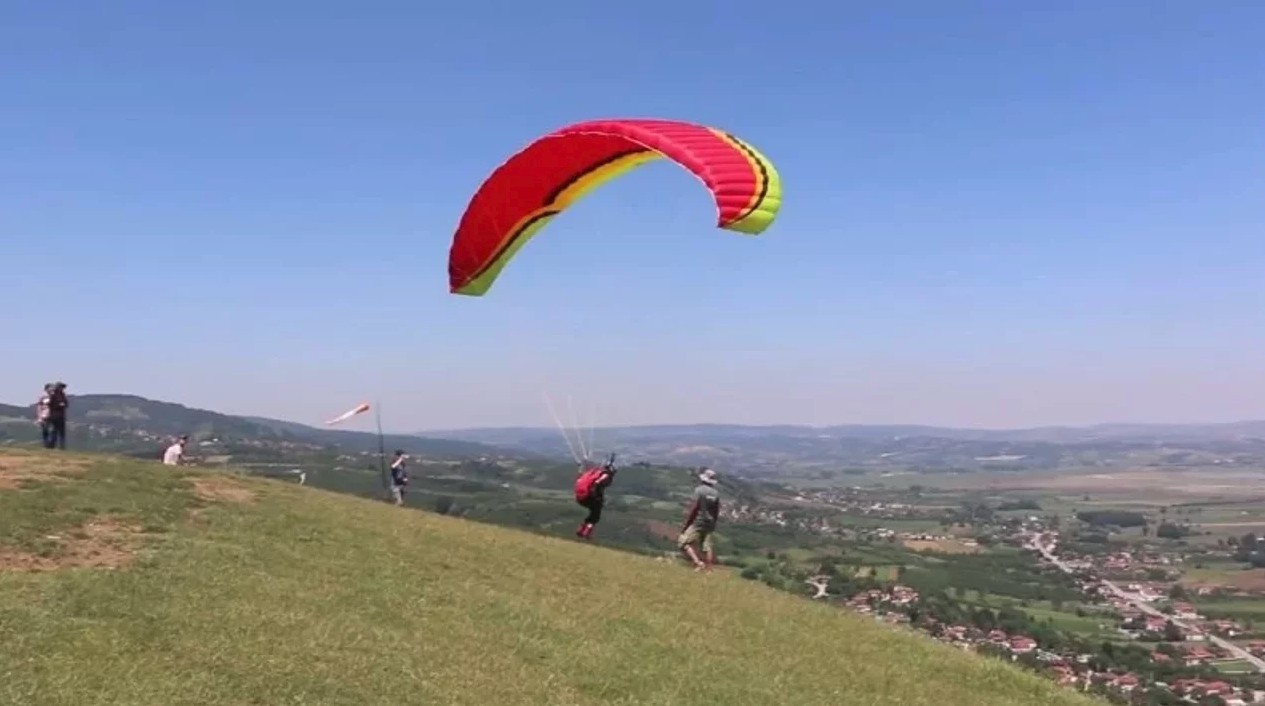
A few minutes earlier I had physically responded to commands, but when I drifted toward the power lines without responding to his turn commands, the tension on the ground spiked. Those who thought I was just enjoying the silence became extremely anxious when they saw me deviating from the route and heading toward dangerous transformers far from the landing area.
While I was gliding with the wind below, I later learned about the great concern the instructors on the hill experienced. When I finally noticed the radio silence and the risk of my position, the training I had received kicked in reflexively. Instead of panicking, I focused on the basic knowledge and landing approach procedures we had gone over many times in class. Making my own decisions, correctly calculating the wind, I managed to avoid the critical power line and made a smooth approach to the landing area.
This landing I performed without radio assistance didn’t just give me a certificate; it gave me the greatest proof that I could trust my own knowledge and composure even in the most difficult moments in the sky.
The World of Equipment
During training, all vital equipment such as wing, harness, helmet, and reserve parachute is provided by the school. However, if you decide to continue the sport as an independent pilot after the beginner stage, you are expected to build your own wing set. Flying with your own equipment is the first step in personalizing this freedom.
The sky may be the home of eagles, but only a human whose feet have left the ground can truly understand the magic of soaring in that blue expanse.
One of the most pleasant surprises of our training process was that our unique moments in the sky were immortalized with a professional vision. Another team on the field was doing a special drone production with Abdullah Hoca’s permission. At that exact moment, my colleague Hakan’s glide was perfectly captured in their frame. When we asked for the footage, they kindly shared it with us. The result wasn’t just a training recording; it was breathtaking scenes that looked like they came from a high-resolution professional documentary.
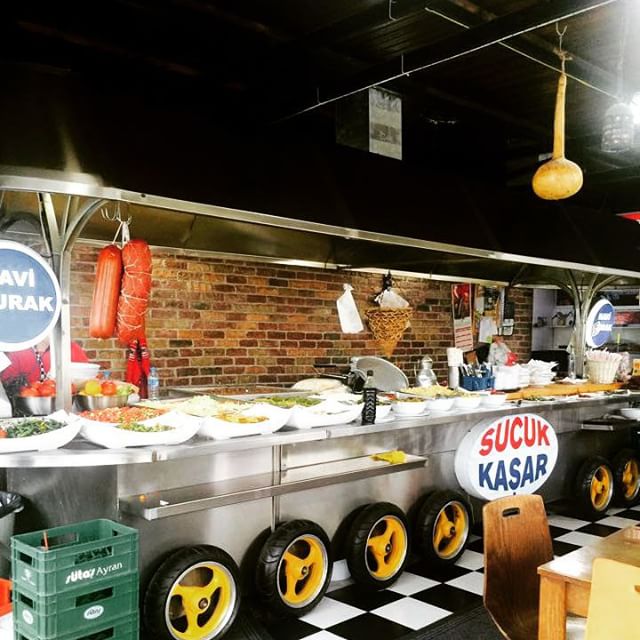
Serdivan has a truly surprising variety in terms of concept venues. One evening we visited a restaurant themed entirely around the Red Kit and Dalton Brothers universe — from the decor to the staff’s costumes — which took us back to the comic book world of our childhood. After the adrenaline-filled hours in the sky, these fun and thematic breaks on the ground became the most beautiful complements to the training.
Hike & Fly: A Mountaineer’s Dream
Since the day I started paragliding, my biggest dream has been to climb to a summit in the mountains and then glide down by opening my wing. This style, which foreigners call “Hike & Fly”, is actually very close to the original purpose of paragliding: Climb to the summit, pack your wing, fly, and land. Both an adventure and an incredible feeling of freedom…
However, realizing this dream is not that easy. Flying in mountain conditions is quite challenging. When wind speed exceeds 30 km/h, you have passed the flight limits. Flying in high altitude, variable and unstable weather conditions requires serious experience, the ability to read the air, and decision-making skills.
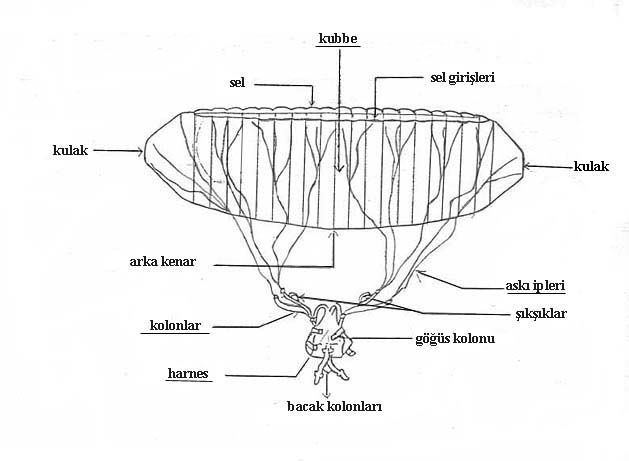
- Wing + lines
- Reserve (rescue) parachute
- Helmet
- Harness (flight seat)
Under normal conditions, the total weight of this equipment is around 12-13 kg. A 12-13 kg pack is a significant burden during a technical climb. However, with modern lightweight materials, this weight can be reduced to as low as 6 kg.
My main goal is this: To be able to use the climbing harness and climbing helmet I already carry during the climb for flying as well. In the lightweight gear world, there are now “string harnesses” weighing only 1.5 – 2 kg that work integrated with climbing harnesses. These systems are the key to the vertical adventures I dream of. As a mountaineer, I eagerly follow the evolution of ultra-lightweight ‘Hike & Fly’ gear, aiming to reduce my extra flight load to under 4 kg. These developments will make mountaineers’ dream of flying from the summit much more accessible.
Advice for Those Who Want to Start
- Professional Support: This sport cannot be learned by “trial and error” or “friend’s advice.” Mistakes in aviation are hard to compensate for. Therefore, always start training with a licensed, experienced professional club.
- Patience and Awareness of Limits: Be patient during the training process. The first flights are short and controlled for a reason — to develop your muscle memory and reflexes. Knowing your own limits in the sky will be your greatest skill.
- Strategic Approach to Equipment Selection: At the beginner stage, equipment (wing, harness, reserve parachute, helmet) is provided by the club. When it comes time to build your own set, don’t rush. In 2015 when I started this journey, beginner sets were in the 2,500 – 4,500 Euro range; as of 2026, a quality entry-level set has risen to 3,800 – 6,000 Euro. Since this is a serious investment, choosing the right equipment with the guidance of experienced instructors is vital.
- The Critical Phase After Training: Make sure to do your first 10-15 flights after getting your certificate under the supervision of an instructor or with an experienced pilot. This transition period after leaving school is when you will improve the most.
- Meteorology: Learn to use weather forecast applications (Windy, XC Skies, etc.) skillfully. When wind speed exceeds 30 km/h or the weather becomes unstable, trust the peace of staying on the ground instead of pushing your limits. As the saying goes: It’s better to be on the ground wishing you were in the air, than being in the air wishing you were on the ground.
- Review the Resources: The Paragliding Pilot Handbook prepared by the Turkish Aeronautical Association contains a lot of information from aerodynamics to meteorology that is also useful in mountaineering. It’s worth taking a look before starting training.
Additional Information: Safety in Paragliding
- EN-A → Beginner level (passive safety, most tolerant)
- EN-B → Intermediate level
- EN-C / EN-D → Performance and competition level
Beginner-level canopies are designed with a highly forgiving nature. Their passive safety features are engineered to automatically stabilize and compensate for minor pilot errors.
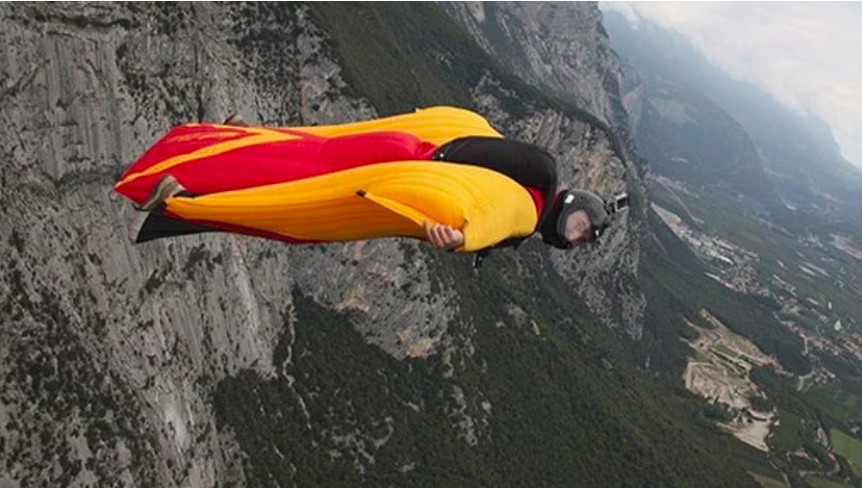
Unfortunately, the situation is very different in Wingsuit. There, even the smallest mistake can lead to irreversible consequences. Therefore, the development of smart safety systems that provide “error margin” like in paragliding is of great importance for the future of this exciting but risky sport.
Paragliding has not only been a sport for me but also an opportunity to look at life from above and push my limits. Do you have a fear of heights, or is the sky also a passion for you? Which club did you train with? How was your first flight? Share your experiences and let’s meet in the comments — perhaps one day we’ll meet among the clouds! 🪂
– Social Media And Contact Details –
►I N S T A G R A M – http://www.instagram.com/alidoguyildiz
►F A C E B O O K – https://www.facebook.com/alidoguyildiz
►B L O G – http://www.yuksektepeler.com
►C O N T A C T – [email protected]