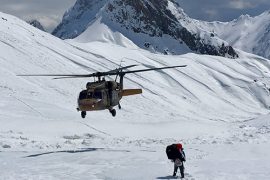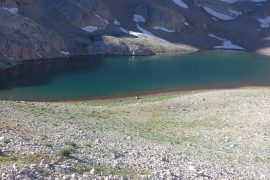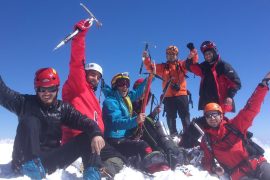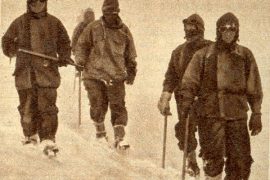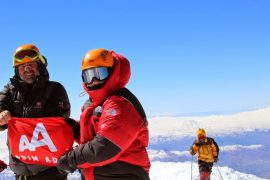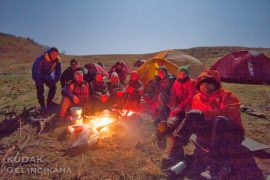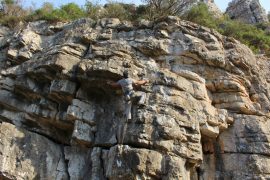
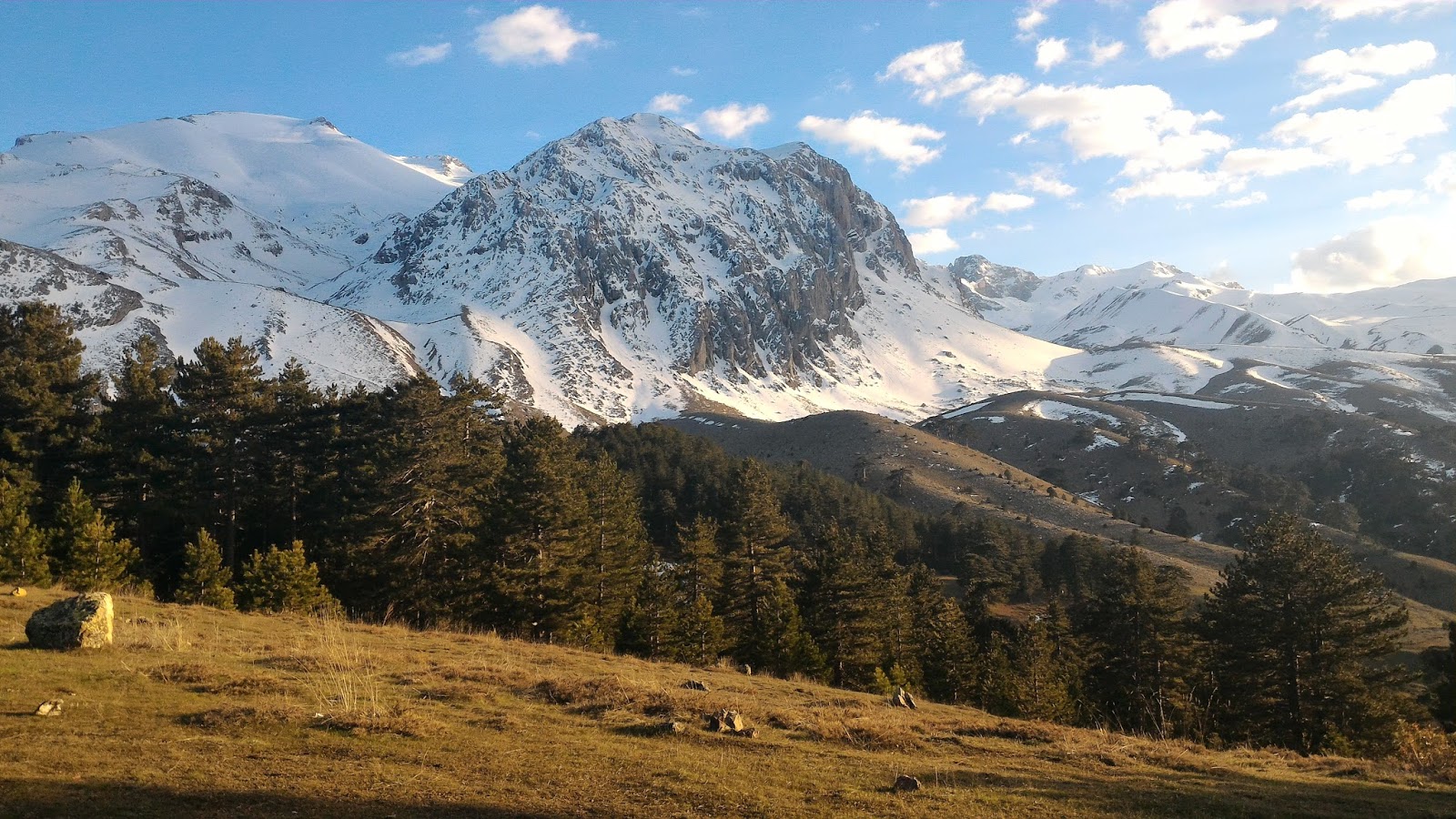
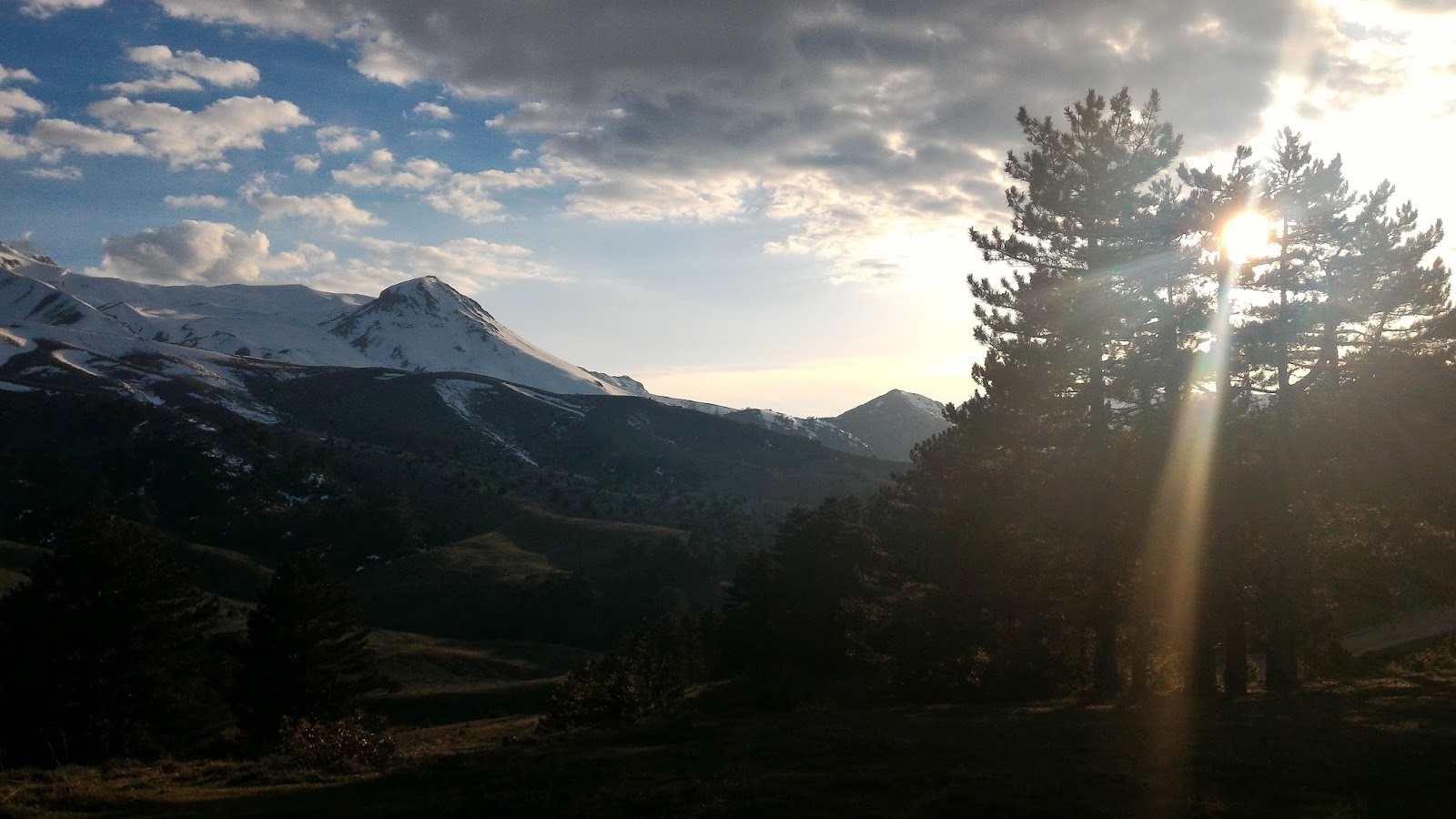
My journey with Mount Dedegöl actually dates back to May 2013. At that time, a severe storm that erupted just a short distance from the summit forced nature to say “not today” and compelled us to turn back. After all these years, I have finally completed this unfinished chapter. Fortunately, the weather was incredibly generous this time; we had a highly enjoyable summit push, and it served as a fantastic training expedition for me.
Perfect for Training: Dedegöl Campsite
Mount Dedegöl, the jewel of Isparta, is a place that captivates anyone, especially with its stunning campsite views. This is not just a spot for seasoned professionals, but a literal academy for mountaineering clubs and those new to the sport. Given its diverse routes and convenient logistics, I can easily call it a premier training ground.
 However, while we highly recommend this area to our beginner friends, it is worth reminding everyone that mountaineering is about far more than just the scenery. This sport inherently carries risks and, without proper care, can lead to chronic health issues over the long term.
A Common Issue Among Mountaineers: Meniscus and Knee Health
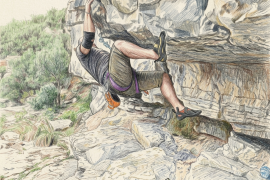
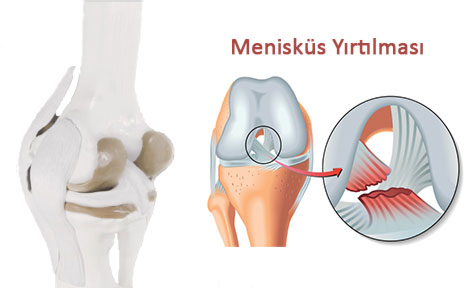
The most frequent complaint I have observed over the years involves issues surrounding the kneecap and its supporting structures. Meniscus tears, commonly categorized as “sports injuries,” do not just occur in sports requiring sudden, explosive movements like football or tennis; they are also prevalent in endurance disciplines like mountaineering, where the knees endure heavy loading over extended periods.
Damage to the meniscus—the cartilage structure that acts as a shock absorber between the two primary leg bones—often starts as minor aches but can progress to joint locking and debilitating pain in later stages. In fact, most of us develop micro-tears in our knees over time; however, once these tears surpass a critical threshold, they severely compromise your quality of life.
How Can You Protect Your Knees?
Entering this sport with weak musculature and insufficient physical preparation is an open invitation to injuries like meniscus tears or joint issues. The golden rule of preserving joint longevity is maintaining strong supporting muscles.
- Targeted Exercise is Vital: Squats, controlled knee extensions, and cycling strengthen the leg muscles (especially the quadriceps), helping redistribute the load from the joints to the musculature.
- Gradual Progression: You should consciously and progressively condition the entire kinetic chain, from your ankles all the way up to your core.
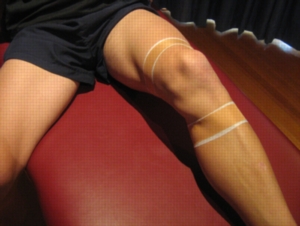
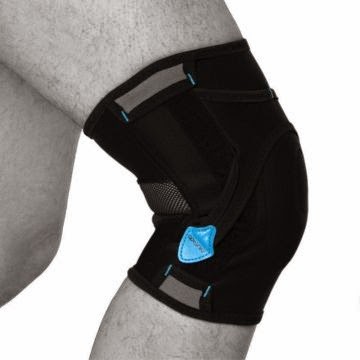
- Supportive Gear: I typically wear compressive knee sleeves during long descents to mitigate impact forces on the joints. I also occasionally apply Kinesiology tape to reinforce the structural support around the kneecap.
If you do encounter an injury, do not lose hope immediately. Modern sports medicine has advanced tremendously. Returning to the field is entirely possible through minimally invasive methods like arthroscopy or regenerative treatments like prolotherapy. However, the best treatment will always be prevention.
For any mountaineer focusing on long-term longevity, the knees are your primary asset. Take excellent care of them, friends. Stay in the mountains, stay safe and healthy!