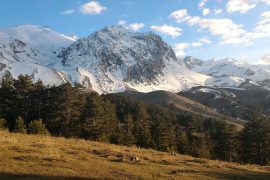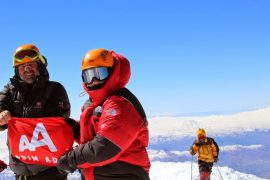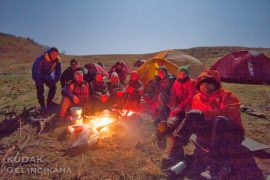
Aladağlar, I really missed you. Coming face to face again with those rugged and majestic peaks felt like reuniting with an old friend I hadn’t seen in years. I never thought I would even miss Mehmet Abi’s tractor ride — that true “monument of discomfort” which launches you out of your seat with every single pothole. The funny thing is, once the climb is over and exhaustion sets in, that shaky tractor trailer starts feeling like the most comfortable limousine in the world.
During the journey, we also witnessed the meeting of technology and nature. A group that brought a drone with them was capturing cinematic footage, the device following us from above as the tractor moved forward. I’m sure the aerial views of Aladağlar’s wild nature will yield fantastic results. We also encountered an energetic group of about 45 university students. The excitement of their first climb was clearly visible in their eyes. Seeing these young people taking their first steps into mountaineering reminded me once again of the region’s never-ending spirit as a natural academy.
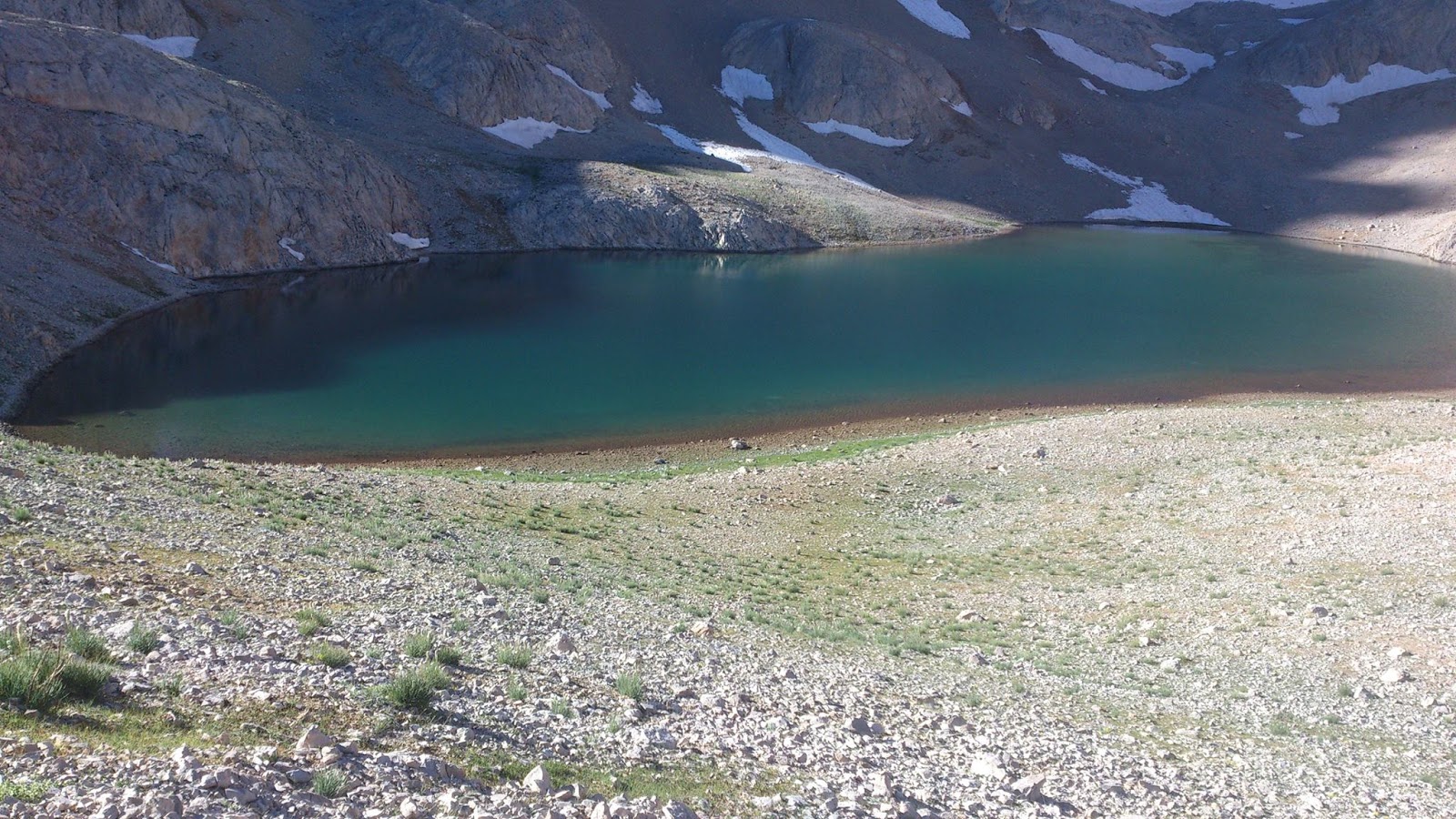
Dipsiz (Bottomless) Lake
So, What Is an MRE and Why Is It So Practical?
Actually, this system was originally developed to meet the high calorie and nutritional needs of soldiers in the field. The packages contain rich menus that cover all daily needs, from main courses to side dishes, desserts, and beverage powders. Today, its usage has expanded incredibly — from hunting to sailing, from extreme camping to emergency preparedness for natural disasters.
Why Ration Packs Instead of Canned Food?
- Easy to Carry: Unlike canned tins, these packs have a large surface area and are very thin. I can easily fit several days’ worth of food into even the narrowest compartments of my backpack.
- Flameless Heater: No need to set up a stove, protect it from the wind, or worry about running out of gas. The chemical heater packs, activated with just a little water, turn your meal into a steaming, home-cooked consistency in minutes.
- Taste: Of course, taste varies from person to person, but in my experience, it doesn’t fall short of home cooking.
I believe every mountaineer who values practicality in nature should keep at least one “emergency” menu in their bag.
Buying Guide
The most important thing to pay attention to when obtaining these practical meal packs is stock availability. There are occasional stock shortages in the market, so it’s worth keeping a close eye on it before the camping season. Since they have a very long shelf life (1-2 years), I preferred to place a bulk order directly from the main manufacturer.
Where to Buy?
- Manufacturer: Unifo
- Tada Brand and Sales Points: tada! Store
| Product Name | Price (June 2016) | USD Equivalent ($) |
|---|---|---|
| Salsa / Chicken with White Sauce | 4.80 TL | $1.64 |
| Minced Meat Sauce Pasta | 3.70 TL | $1.26 |
| Barbunya Pilaki | 3.85 TL | $1.31 |
| Grape Compote | 1.65 TL | $0.56 |
| Chemical Heater | 2.50 TL | $0.85 |
| Heater Bag | 2.00 TL | $0.68 |
* Calculations are based on the average USD exchange rate in June 2016 as 2.92 TL.
Important Notes:
- Shelf Life: When buying in bulk, be sure to check the expiration dates on the packages. Their suitability for long-term storage also provides a great advantage for creating emergency stockpiles at home.
- Heating Set: Don’t forget that you need both the chemical element and the special heater bag in which the reaction takes place to heat the meal.