Return to Cilo: A Climb Not to the Summit, But to Life – 2019
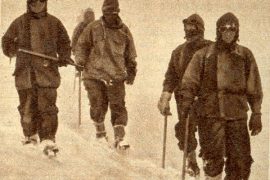
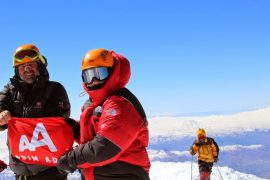
This was my second winter mountaineering adventure in the Cilo Mountains. This region holds a special place in Turkey’s climbing community. In 2013, I had been part of a team that made headlines for completing the first winter ascent of Reşko (Uludoruk) — Turkey’s second-highest peak — after a 32-year gap. Pre-expedition Media Briefing/
In the Shadow of Symbols: Cilo’s Hidden Majesty
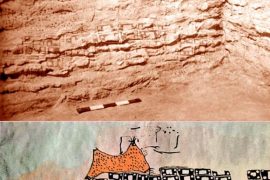
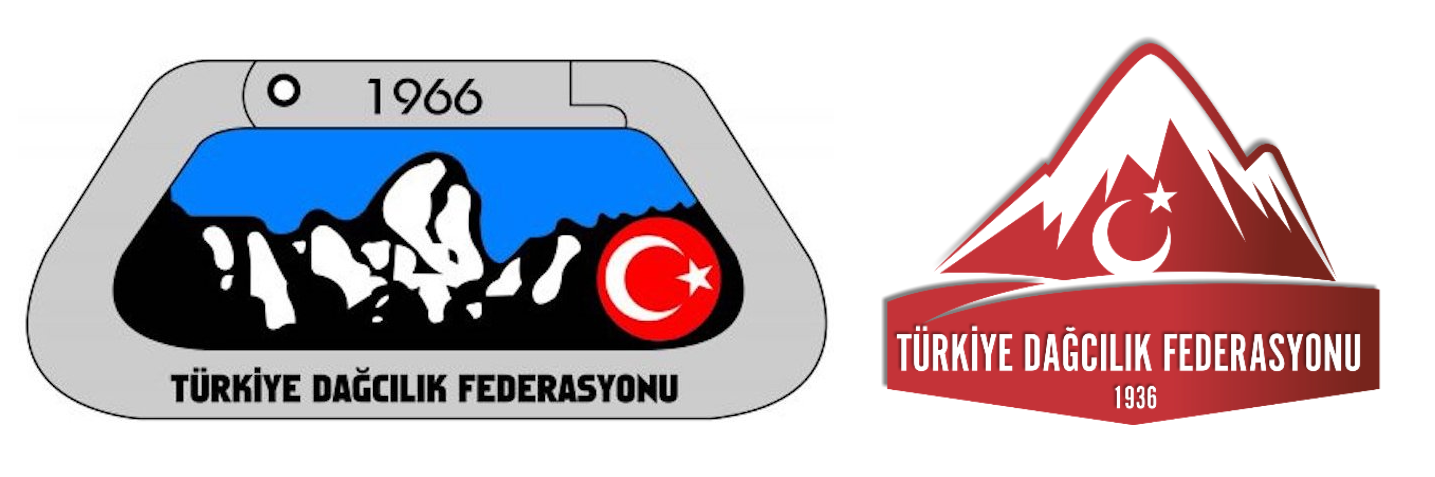
There has long been a whispered claim within the mountaineering community — one rarely voiced officially, yet deeply etched in collective memory: The rising silhouette in the old, iconic logo of the Turkish Mountaineering Federation (TDF) was actually that of the Cilo Range, Turkey’s second highest peak.
For those who speak the language of symbols, Cilo represented the purest and most technical form of mountaineering. But times changed. The old symbol gave way to the political and geographical weight of Ağrı Dağı, Turkey’s highest peak. Choosing Ağrı for the new logo may have been a declaration of “number one,” yet for us, Cilo has always remained that proud, hidden silhouette from the old emblem.
And so, staying true to the spirit of that old logo, we set out on a journey toward the real majesty beyond the symbols — to the heart of Cilo, among Turkey’s most technical, rugged, and untamed peaks.
This was not merely a climb. It was also a quiet quest for justice/recognition of that forgotten silhouette…
In March 2019, I flew from Istanbul Sabiha Gökçen Airport to Van with three climbing friends. Our plan was to continue from Van to Yüksekova by intercity minibus, which departed hourly. While the other eight members of our team flew directly from the European side of Istanbul to Yüksekova, we chose Sabiha Gökçen because it was closer to our homes. At that time, there were no direct flights from Sabiha Gökçen to Yüksekova. Still, our route was budget-friendly and relatively convenient. When you live in a metropolis like Istanbul, which side of the city you live on becomes just as important as cost when planning a trip.
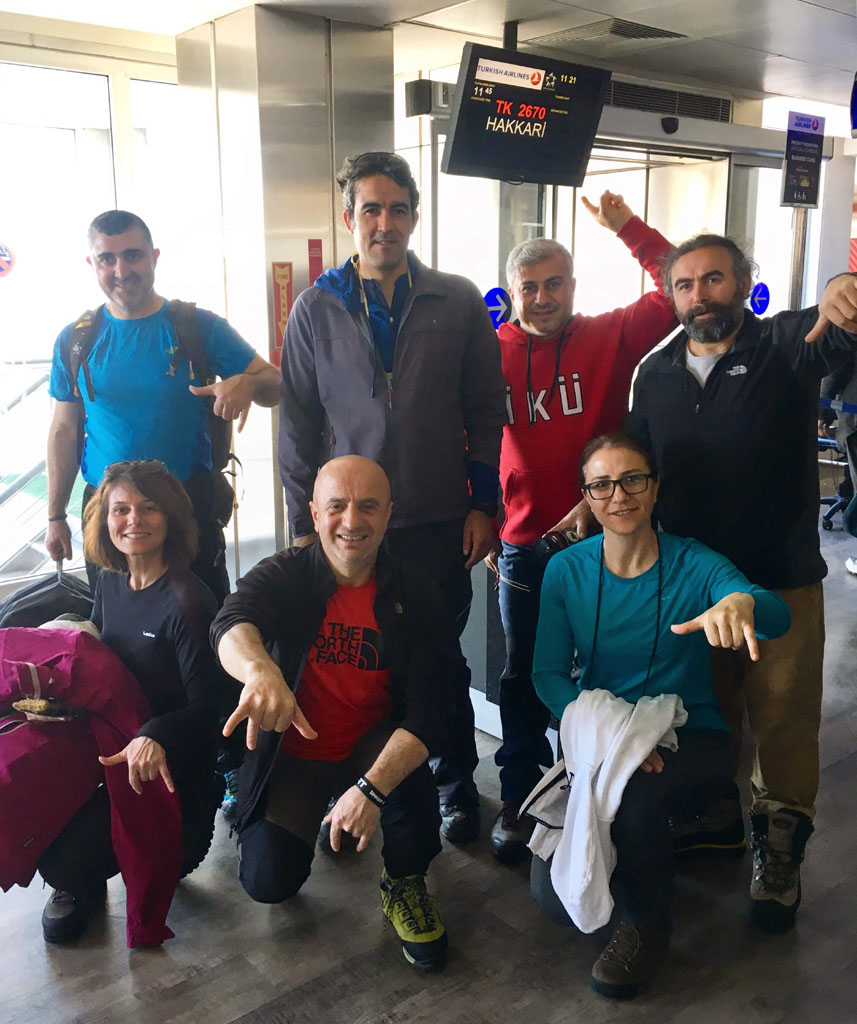
On the day of the flight, I boarded the plane with excitement, stowed my carry-on, and took my seat. From the last identity check until boarding via the jet bridge, I had been walking absentmindedly, staring at my phone. In my hands were my phone, fleece jacket, wallet, and boarding pass. While slipping the boarding pass into my wallet, I opened it in a daze — my ID was gone. It felt as if a bucket of ice-cold water had been poured over me.
Heading to Cilo Without ID: Divine Warning or Simple Forgetfulness?
I tried to calm myself, thinking I must have put it in my bag. I sat in my seat pretending to be relaxed, but an overwhelming anxiety pushed every other thought aside. I checked all my pockets. I probably dropped it while boarding after the final ID check, or maybe I had stuffed it somewhere in my bag. When the plane landed in Van, I searched my carry-on more carefully, but it wasn’t there. After everyone had disembarked, I explained the situation to the cabin supervisor. He told me to wait in the baggage claim area and that if the ID was found on the plane, they would bring it there. I waited for a while, but no one came. Meanwhile, I somehow found the ground services phone number for Sabiha Gökçen Airport, called the lost and found office, and asked about my ID. The answer was negative…
Arrival in Van city and the Taxi Driver’s Justified Concern
With nothing left to do at the Van airport, the three of us took a taxi to the city center. When the driver loaded our bags into the spacious trunk of his Doblo car, he immediately realized we were mountaineers. When we told him we were heading to Cilo, he looked worried and said:
“What are you doing up there in this weather, brother? Something might happen to you.”
He spent the entire ride trying to dissuade us. He offered to show us around Van and even invited us to his home as guests. We politely thanked him for his sincere invitation and said, “Maybe next time, God willing.”
Journey into the State of Emergency (OHAL) Region Without ID
As soon as we landed in Van, my friends and I had only one thing on our minds: reaching Yüksekova as quickly as possible. There was just one major problem—I didn’t have my ID on me. To make matters worse, a state of emergency (OHAL) had been declared in the region due to recent events, and we knew all too well that we would encounter frequent checkpoints along the way.
In search of a solution, we headed straight to the Provincial Directorate of Population in the city center together. I explained the situation, showing them the only thing I had: my Turkish Mountaineering Federation (TDF) license. The chief official stated that a formal investigation would be required and that he couldn’t issue a temporary ID. We left empty-handed.
While brainstorming our next move, we thought of going to the local police station; perhaps an official police report could get us through. There was a massive queue at the entrance. I stepped into line and waited. Noticing the line wasn’t moving an inch, I turned to the guy in front of me with the clueless bewilderment of Kemal Sunal—the legendary Turkish comedic actor—and asked, “Brother, what is this queue even for?” It turned out they were people released on judicial control waiting to sign in, and since the station was on lunch break, everything had ground to a halt. I stepped out of line, signaled the situation to my friends, and walked toward the entrance. As my backpack passed through the X-ray machine, the police officer spotted my drone and instantly grew suspicious. After a brief interrogation, he informed me that population procedures had been transferred to provincial directorates and advised me to call the official helpline. We walked out of there empty-handed, too.
I had never experienced entering a state of emergency zone without an ID before, but there was no turning back now. Driven by that stubborn mountaineer spirit and backed by my friends’ support, we pushed forward toward Yüksekova together, with nothing in my pocket but that climbing license.
The Journey to Yüksekova Begins: Eastern Hospitality
While wandering the streets of Van, the time for the last minibus to Yüksekova (16:00) was approaching, so we reluctantly returned to the ticket office. We bought tickets for the final departure and set off with my three friends. The journey passed quickly with conversations. As darkness fell, we stopped at a roadside rest area. A young man ran out from inside without a jacket in the freezing cold, opened our van door, and warmly welcomed us.
We entered the facility as oddly dressed strangers from the west. People inside were watching a football match with interest, but they didn’t hesitate to chat with us. When we tried to pay for our tea, they refused, saying, “You are our guests.” These were things we weren’t used to in the west.
The Mountaineering License as a Lifesaver
As we approached Yüksekova, the expected identity checks by gendarmerie and police began. The smallest problem would mean failing to catch up with the team and the cancellation of the entire expedition for me.
This “boiling water pouring over me” feeling was not unfamiliar. Whenever real danger had approached in my life, the same alarming warning had risen inside me. This time, it was particularly strong. It felt as if an invisible hand had touched my shoulder and whispered in my ear: “Brother, you have no idea what awaits you on that mountain — maybe it would be better to stay home and watch a mountaineering movie.” The universe seemed to have pressed the “stop” button.
Yet the stubborn mountaineer inside me refused to yield even to such a strong warning. With only my TDF mountaineering license in my pocket, I continued toward Yüksekova, where the strictest security measures of the OHAL region were in effect.
At every checkpoint, I would take out my license and hand it to the officer, feeling a bit like James Bond — except “007” was replaced by “Mountaineer 001 – The Identityless Edition.”
The thought “Will they detain me this time?” hit me like a punch in the stomach at every stop. It was more than enough adrenaline even for thrill-seekers. Of course, I didn’t give up. Because real courage is not just reaching the summit, but being able to say “I’m still going” while the universe keeps shouting “Stop!” at you.
Fortunately, we were allowed to proceed every time and reached Yüksekova without issue. This adventure taught me a very valuable lesson: From now on, I will carry my spare ID, passport, driver’s license — even my mother’s ID card — in separate bags.
I didn’t take any chances for the return flight either. I asked my family in Istanbul to ship my driver’s license to the hotel. When the expedition ended, my license was waiting for me neatly at the reception desk. At least this plan had worked more flawlessly than the games the mountain had played on me.
Meeting the Team and a Memorable Evening in Yüksekova
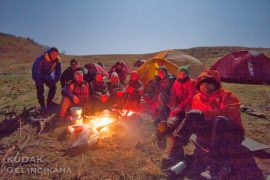
The friends who had flown from the other airport had already settled into the hotel. They had joined a welcome dinner organized by the Yüksekova Nature Enthusiasts group at a nearby venue. We left our gear in the hotel lobby and joined them. We came together with Sönmez Erkaya, President of the Klos Mountaineering Club, along with our other climbing friends from Istanbul, and the Yüksekova Nature Enthusiasts team. After dinner, we sang songs and folk tunes together. We spent a wonderful evening playing the saz, singing türküs, and dancing halay with great young people.
Day 1:
Yeşiltaş Military Post and Avalanche Terrains Reminiscent of the Karakoram
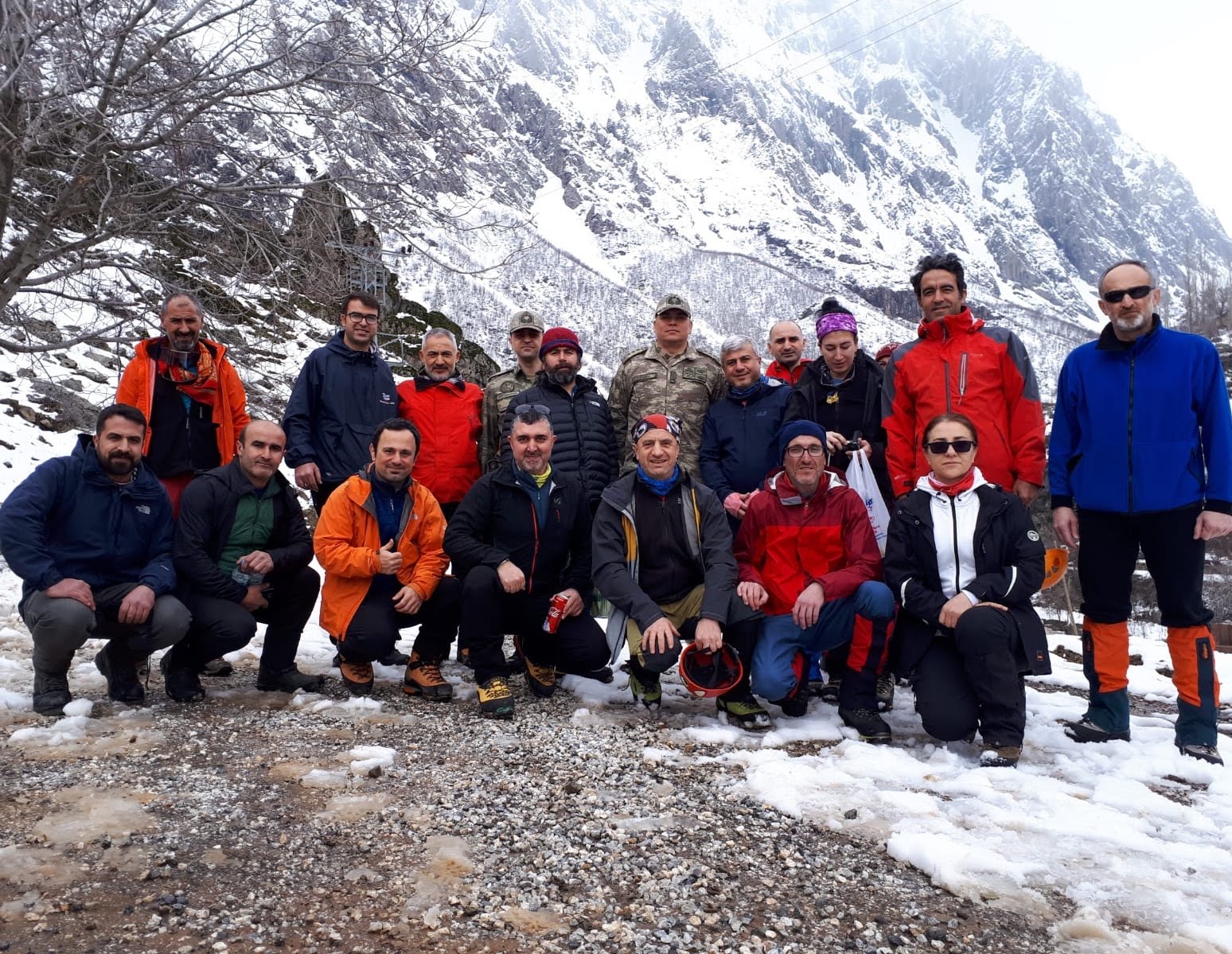
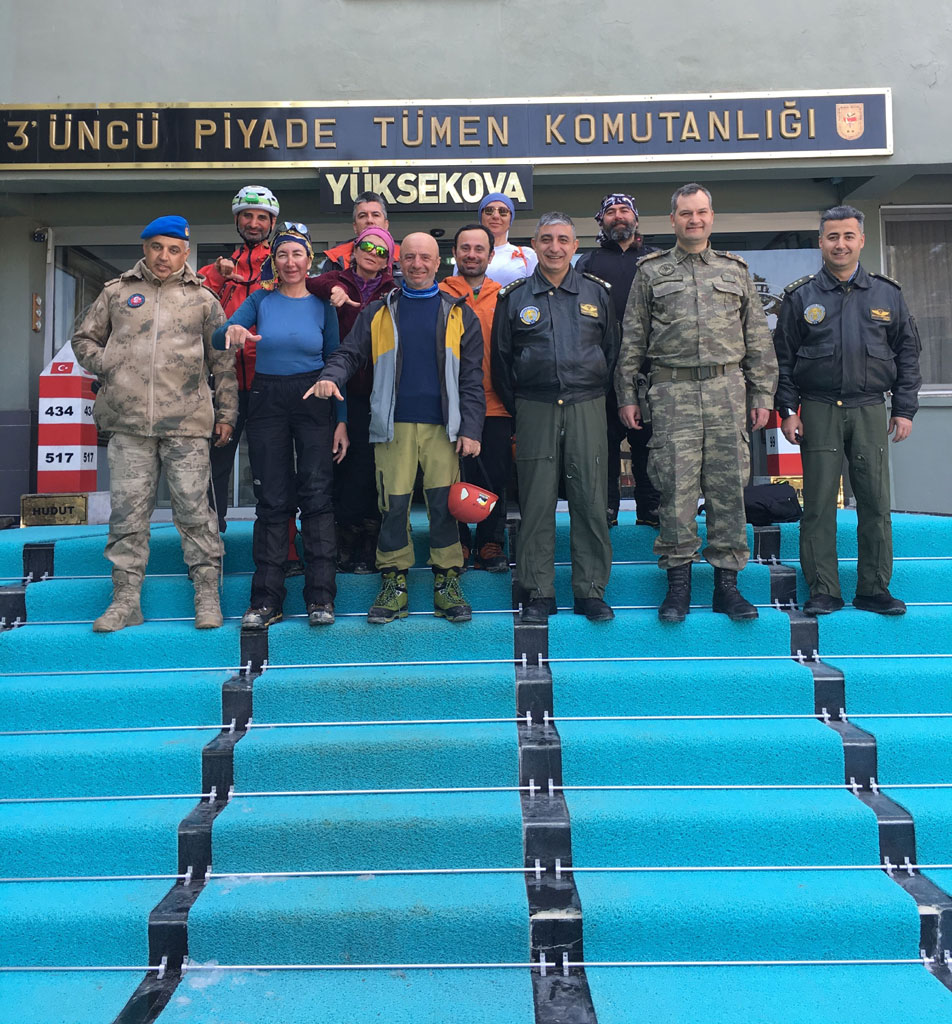
At the first light of morning, our full team of two minibuses arrived at Yeşiltaş military post. The Turkish soldiers welcomed us with warm hospitality in the freezing cold. The commander’s encouraging speech further ignited the climbing fire within us. When I had come in 2013, the procedure had been completely different — each of us had been asked, “Did you come here of your own free will?” I understood the security measures, of course, but for a team carrying heavy mountain loads, motivation was everything, and this commander gave us exactly the morale we needed. After taking a group photo shoulder-to-shoulder with the soldiers, we shouldered our heavy backpacks with high energy and took our first steps into the endless white.
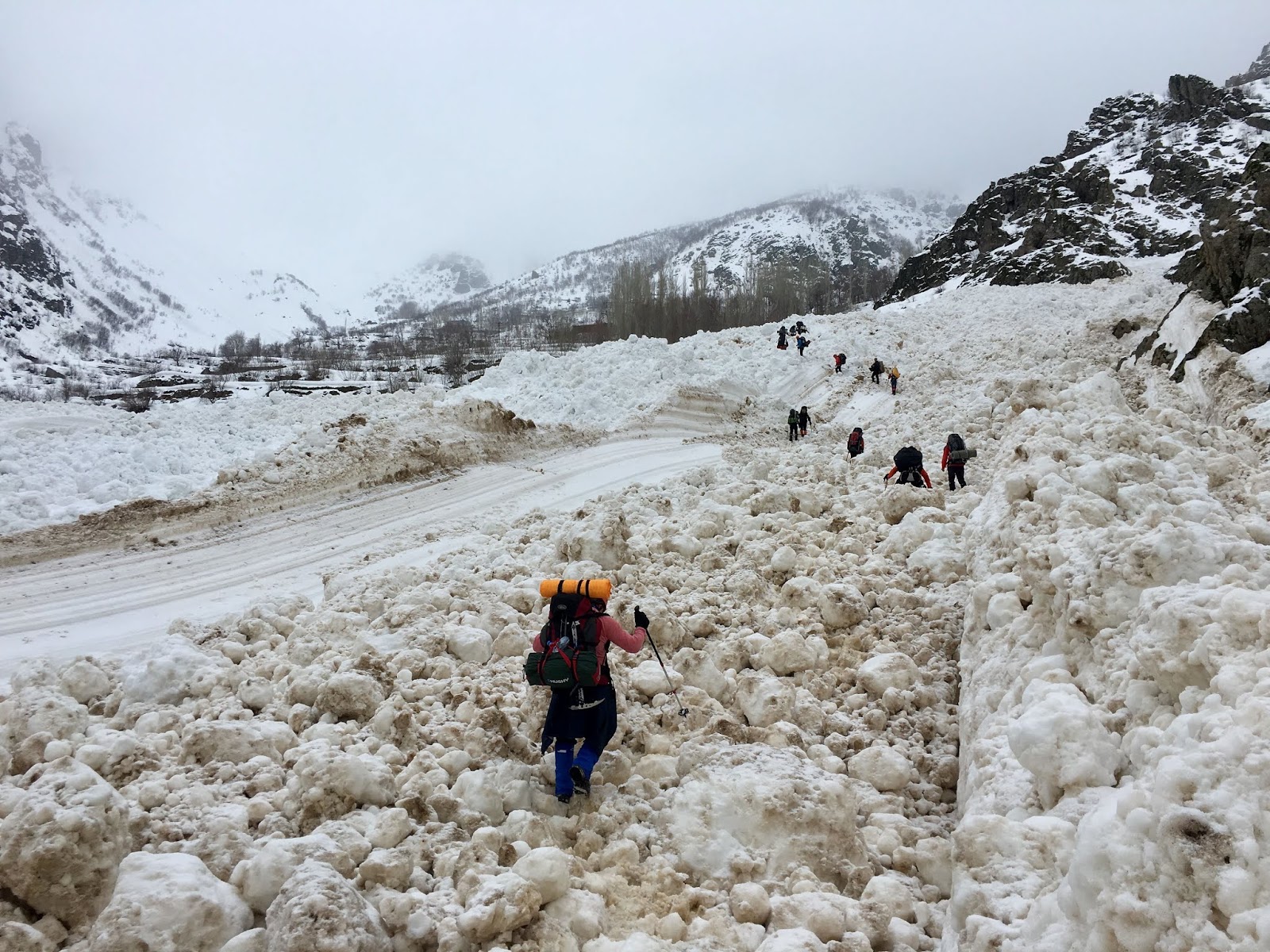
But nature was not smiling on us. Until we reached Serpel Plateau, we advanced through waist-deep wet snow and relentless snowfall. As we passed through endless avalanche-prone sections, a heavy silence fell over the team. The landscape was no different from the merciless Karakoram ranges in Nepal or Pakistan. If the first stage was like this, what kind of hell awaited us higher up?
The Cilo Mountains are not only home to Turkey’s second-highest peak but also serve as the westernmost representative of the massive Himalayan Mountain belt. This is why the ‘Karakoram vibe’ we felt during the climb is no coincidence; it is a genetic heritage of the geography itself. Although the region resembles the Alps in its general appearance, it hosts the largest glaciers in Turkey.
Small Mistakes, Big Prices on the Mountain: Frozen Fingers
I had three pairs of gloves with me: inner, mid, and outer layers. Thinking that only the mid-layer would suffice at the start was the kind of arrogance the mountain does not forgive. By evening, my wet gloves began to freeze my fingers, while the dry ones waited in a hard-to-reach corner of my backpack. Saying “We’ll reach camp soon” and postponing the glove change out of laziness, the light numbness in my hands turned into a knife-like pain with the increasing wind. I almost paid for this mistake by frostbiting my fingertips. It taught me a vital winter mountaineering lesson: There is no room for laziness on the mountain, and life-saving gear must always be within easy reach! In Cilo’s freezing glaciers, choosing the right equipment is not a preference but a survival strategy.
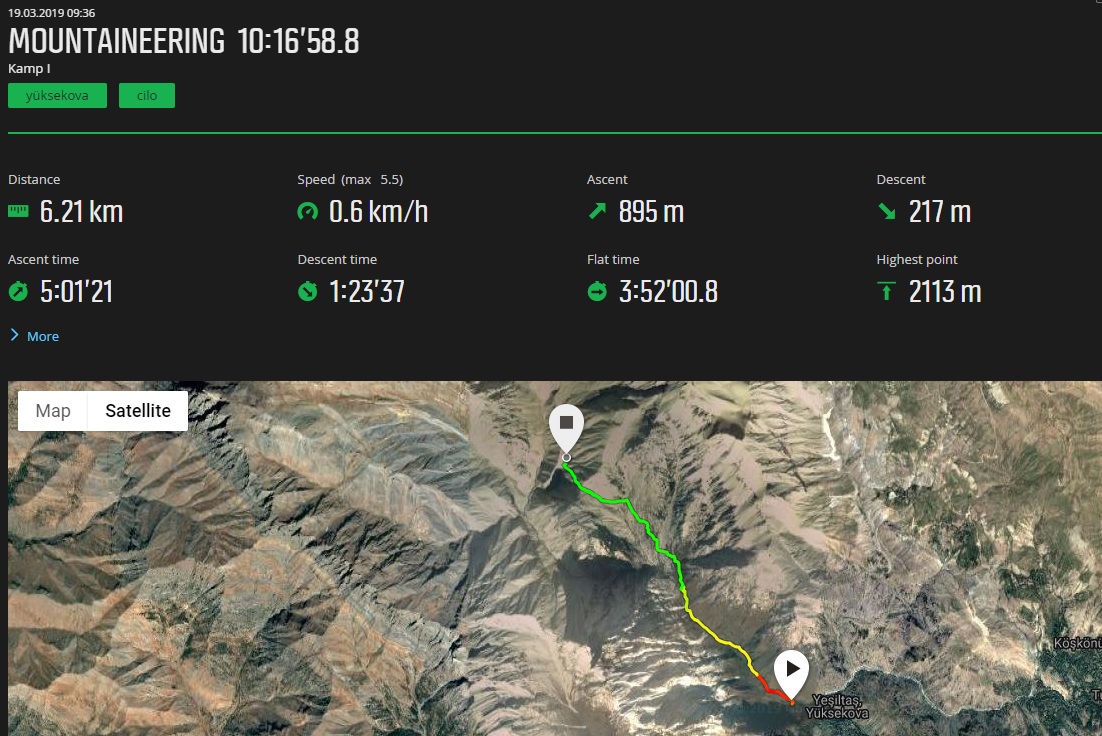
While local pack animals can help carry gear partway on summer climbs, no such support exists in winter’s harsh conditions. All the camp load and technical equipment was on our shoulders alone. We completed the grueling 6.5-kilometer route in exactly 10 hours and reached the Serpel Plateau camp at 2100 meters. However, the area’s topography offered no absolute safety; every slope carried potential avalanche risk. With a strategic decision, we chose a line where an avalanche had already occurred and much of the snow load had been released. We set up our tents as darkness fell. That night, slipping into my down jacket and down sleeping bag brought not just warmth, but the most primitive and pure peace that comes from simply being alive.
Day 2:
Fetching Water from a 3–4 Meter Snow Wall and “The Grueling Azap Couloir”
The next morning, the sun had not yet reached our tents but was shining on the opposite slope. On the mountain, when the sun is close but not shining on you, you feel sudden and freezing temperature swings as if the door of a refrigerator is opening and closing. With our eyes on that first sunlight, we began breakfast preparations.
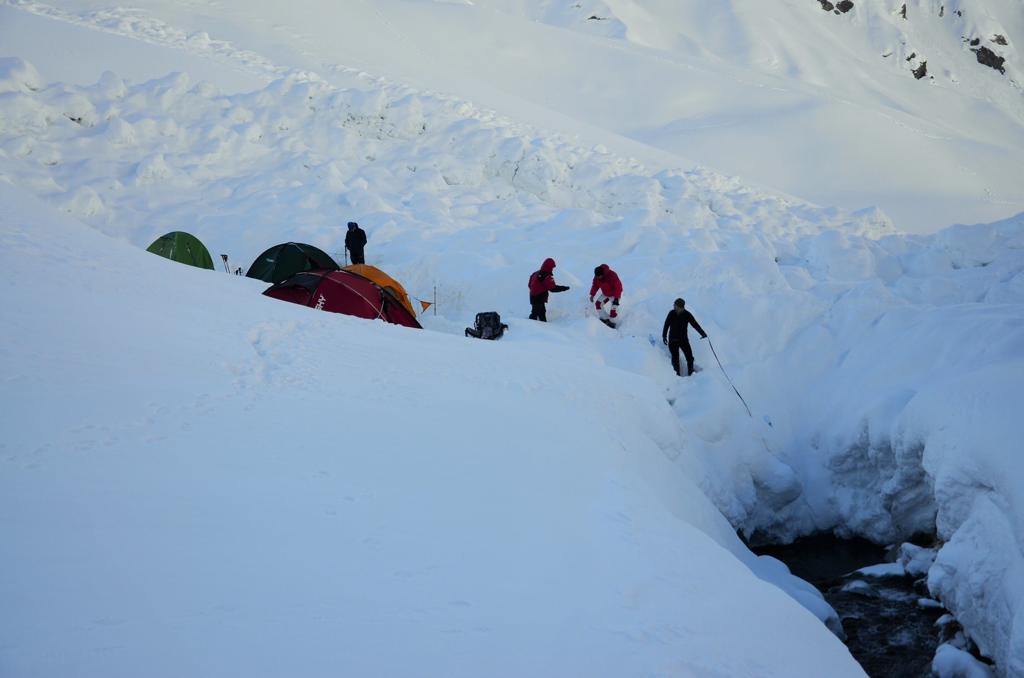
We needed to go down to the stream for water, but a 3–4 meter snow wall made it impossible. I tied an empty plastic bottle to a rope and lowered it. The light bottle wouldn’t sink and fill with water. I cut it in half and tried again, but when pulling it up, the rope didn’t drop straight like a well, so the water always spilled along the way. We could have set up a station and tried a proper rappel, but it would have been too exhausting while hungry and thirsty. Necessity is the mother of invention, they say. I brought my thermos, tied the rope to it, and lowered it into the stream like Eskimos fishing through ice holes. The heavy thermos sank easily into the water, and that tiny carabiner hole at its mouth became the most vital design wonder in the world at that moment. Thanks to that small opening, we pulled up clean water without spilling a single drop. It saved the entire camp. Otherwise, those valuable gas cartridges would go to waste, leaving the team stranded with that awful-tasting snow water—impossible to gulp down unless mixed with flavored drink powders.
The 800-Meter Climb That Forged Our Will
The previous day’s avalanche terrain and brutal weather had broken the resistance of some team members. During the technical meeting, several friends decided to turn back. We took their gas canisters and extra food and said our goodbyes. After seeing them off with a local guide, the loads on the backs of those who remained became even heavier.
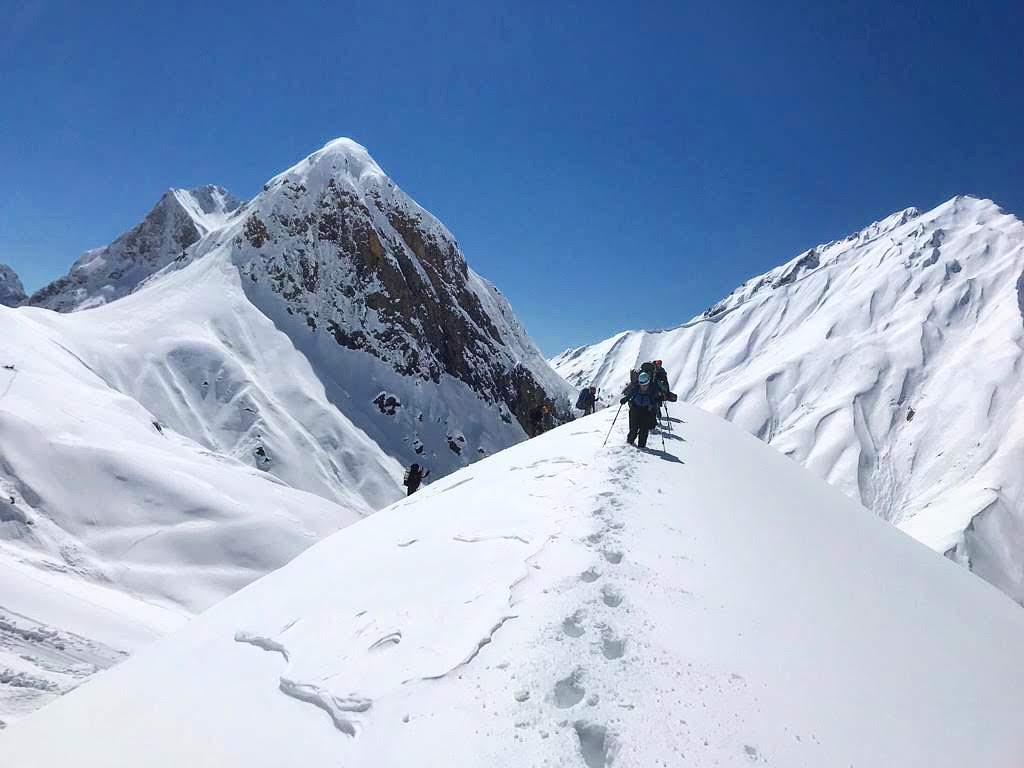
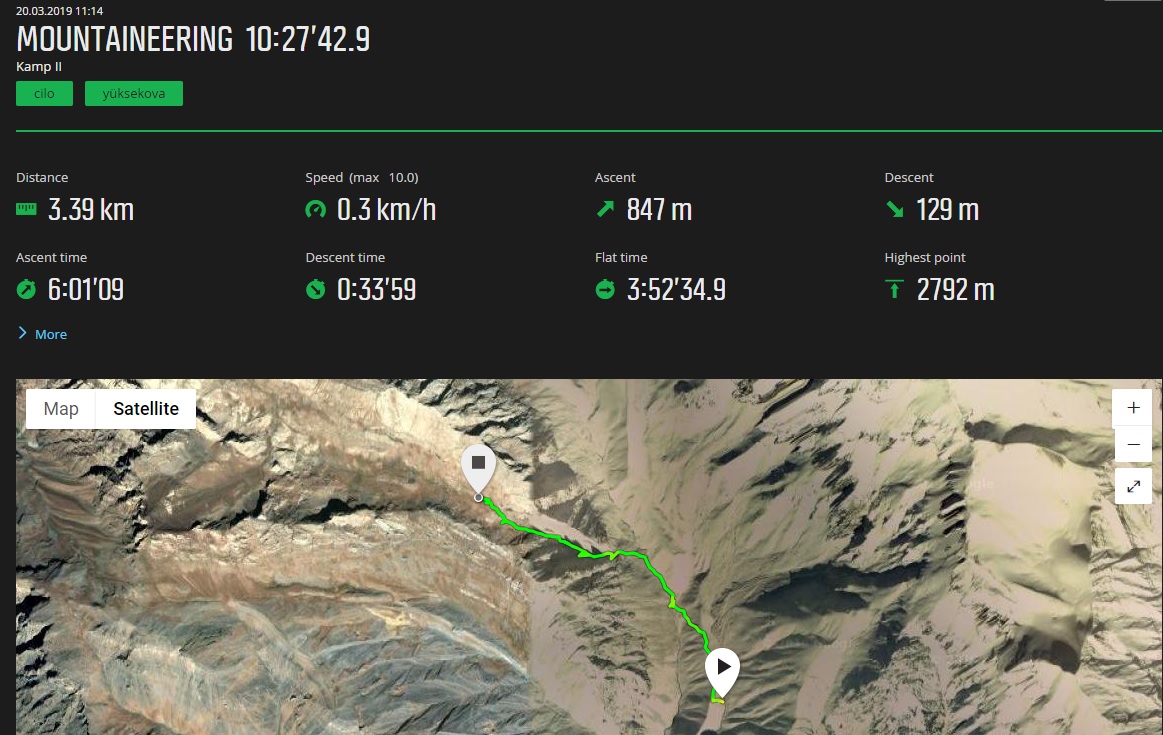
To reach Horkedim Plateau at 2900 meters, we faced the steep and merciless 800-meter section we named the “Azap Couloir” (Couloir of Torment). My backpack, which also contained a 5.6 kg tent, felt as heavy as lead. Stepping through knee-deep snow was like drilling into an oil well. Breaking trail under that terrible weight was not something you could endure for money. It could only be done with unshakable faith and tremendous team spirit. Around 22:00 at night, we managed to set up our second camp about 100 meters below our target. We were exhausted, but our will was still standing.
Day 3:
Summit Plan and Midnight Start
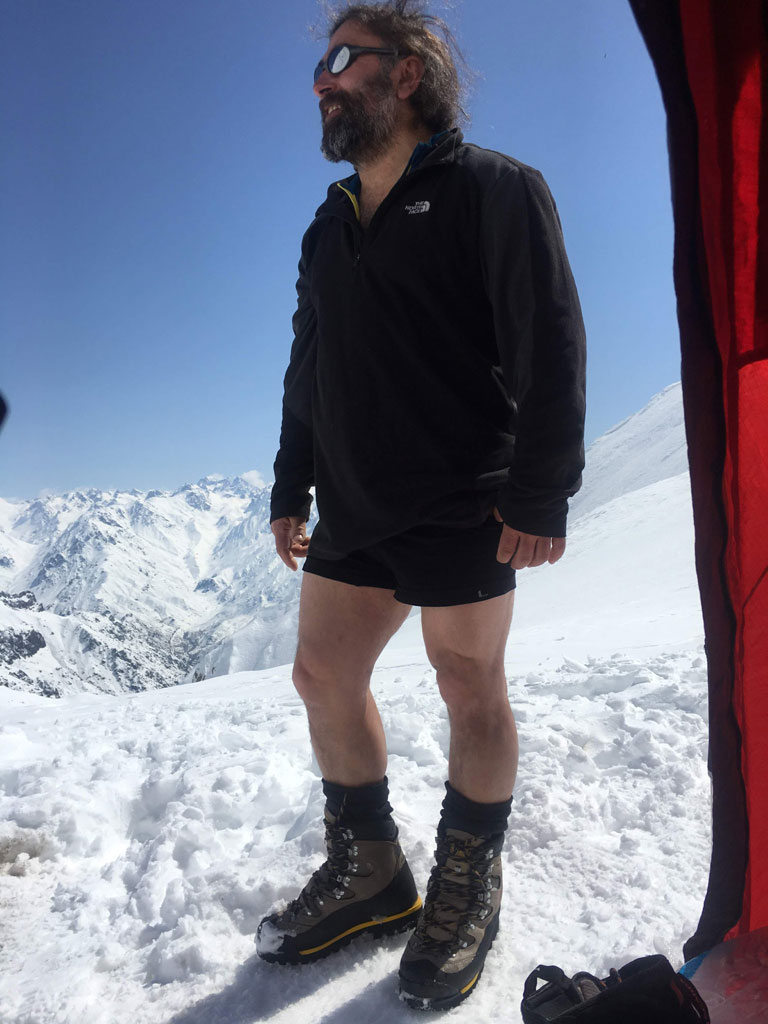
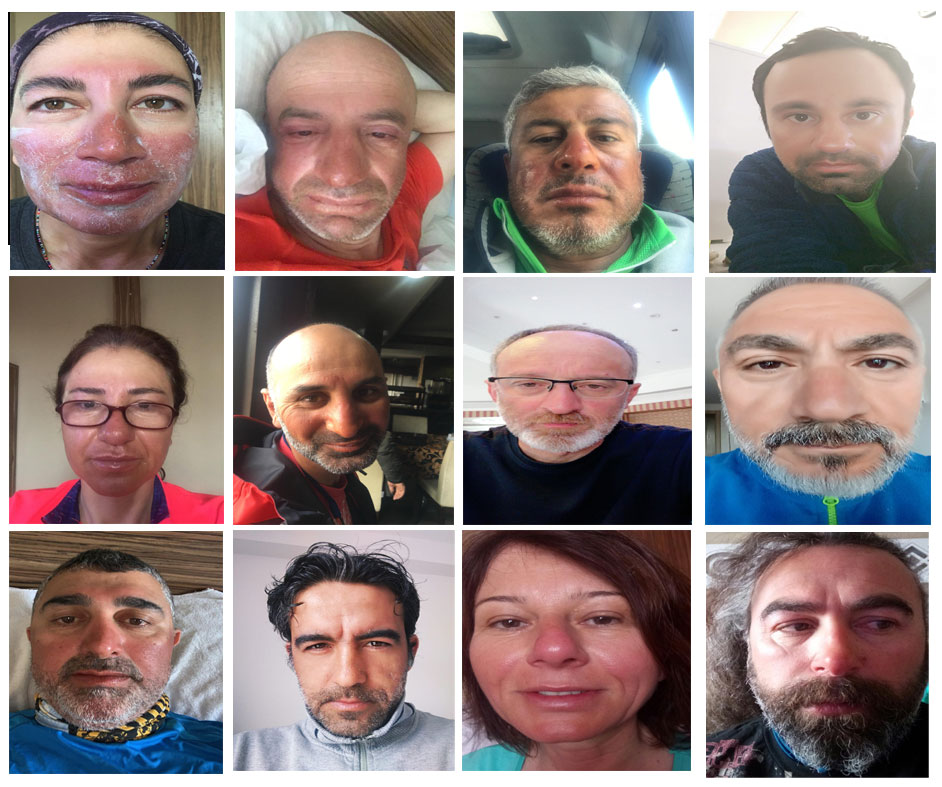
Today was a rest day, allowing us to fully enjoy camp life. While we were busy with laundry and camp logistics after breakfast, Sönmez stepped in front of the lens as our model. We experienced once again that the mountain sun is no joke; stepping out without factor 50 sunscreen is far riskier than a tanning bed. Sönmez’s 20-minute ‘modeling’ stint left him with sunburns as a souvenir. To expand our comfort zone, we didn’t neglect building ‘squat-style’ toilets by cutting through snow blocks. While these structures provide great comfort and hygiene in the wild, we were still defenseless against the overhead drones 🙂
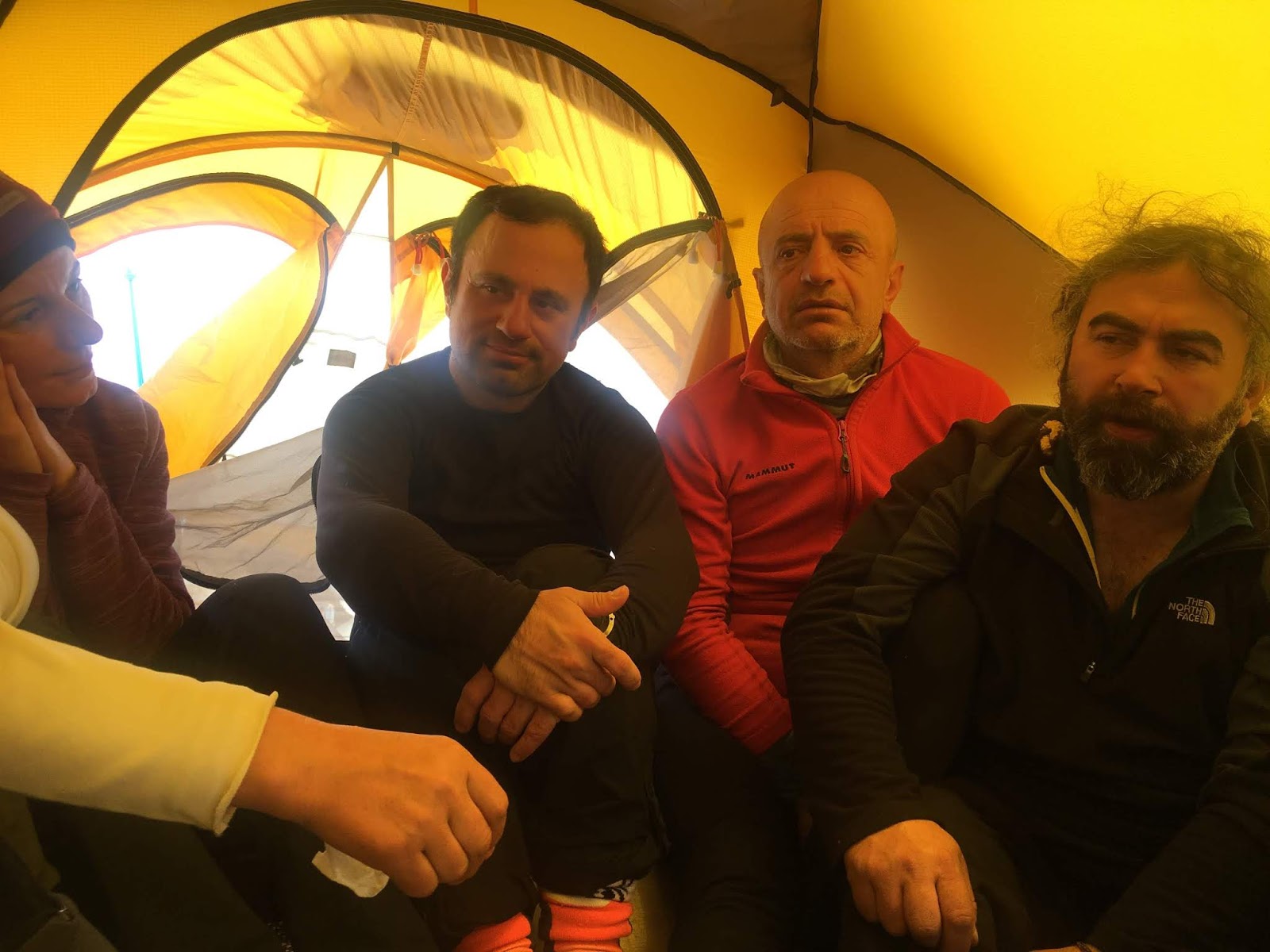
In the afternoon, we gathered in Sönmez’s tent for a technical meeting and made the critical decision: the summit push would begin at midnight, 00:00. As darkness fell, everyone retreated to their tents to gather energy. However, sleep had never been something that came to me on command. While my tent mates quickly drifted into deep sleep, I lay inside my sleeping bag with my eyes wide open, staring into the darkness.
The heavy tension before the summit attempt was accompanied by the mechanical buzzing of UAVs circling overhead. During my 2013 climb, these drones had flown almost directly over our camp, completely robbing me of sleep at night. The technology must have advanced considerably over the years, because this time they were flying much higher. Although their sound was fainter than before, that thin, relentless buzzing still made its presence felt in the mountain’s solitude.
Of course, the UAVs outside weren’t the only problem. Inside the tent, a completely different battle was taking place. At high altitude, my relationship with sleep was as bad as ever. But the real entertainment was the secret competition that mountaineers rarely admit to, yet we all know very well: the race to fall asleep before the Snoring Symphony begins.
The rule was simple: If you couldn’t reach the harbor of deep sleep before your rivals, you were doomed to sit through the loud, merciless concert that would last all night. That night unfolded exactly as expected. My friends had won the race and had already begun their performance. Meanwhile, I remained awake, listening to the mountain’s silence between the drones outside and the snoring orchestra inside.
Day 4:
The Thin Line Between Life and Death at 4000 Meters
At around 01:00, we were on the summit route. We walked without stopping until dawn. Toward midday, the greatest psychological torture of summit climbs began: the “false summits” were wearing us down. Every time I crested a rise, I would think “This is the summit,” only to face another one behind it. The steep section between 3700–3900 meters was extremely tiring. With a clear blue sky above and a white hell below, I felt like I was dying of thirst in a horizonless desert. At one point, I deliriously wished the drones circling above would drop cold water on us.
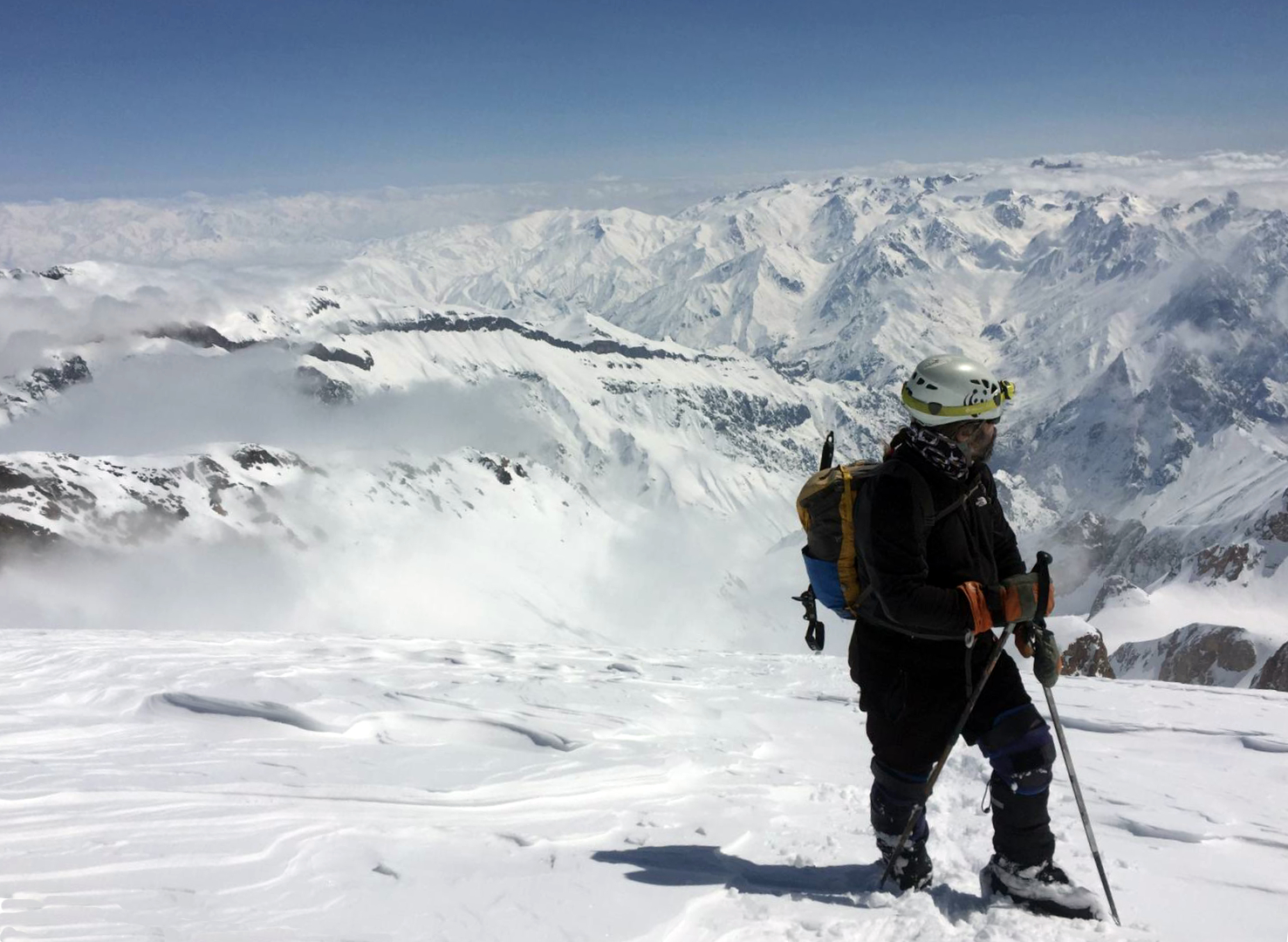
By afternoon, we reached the 4000-meter plateau. Only 135 meters of elevation gain and a technical knife-edge ridge that would take at most 1–2 hours remained. After a short break, we roped up. Sönmez, at the front, said: “If I shout ‘Attention,’ everyone drop to the ground and plant your ice axe — we’re doing a fall practice.”
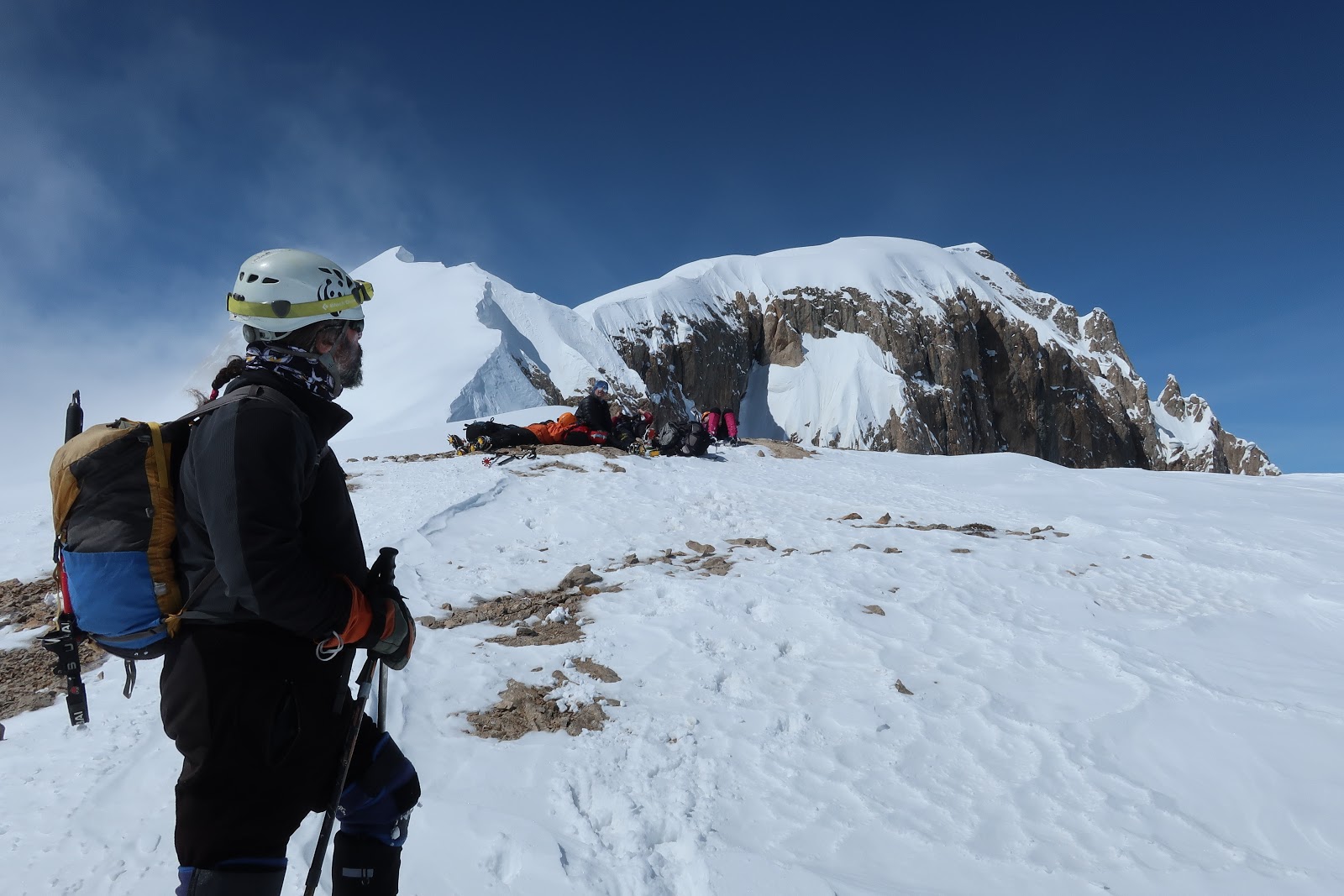
A few minutes later the shout came, and we all reflexively dropped. Just then, the weather began to deteriorate and fog rolled in. While the leader was praising our reflexes, he had no idea that nature was about to conduct its own much harsher drill.
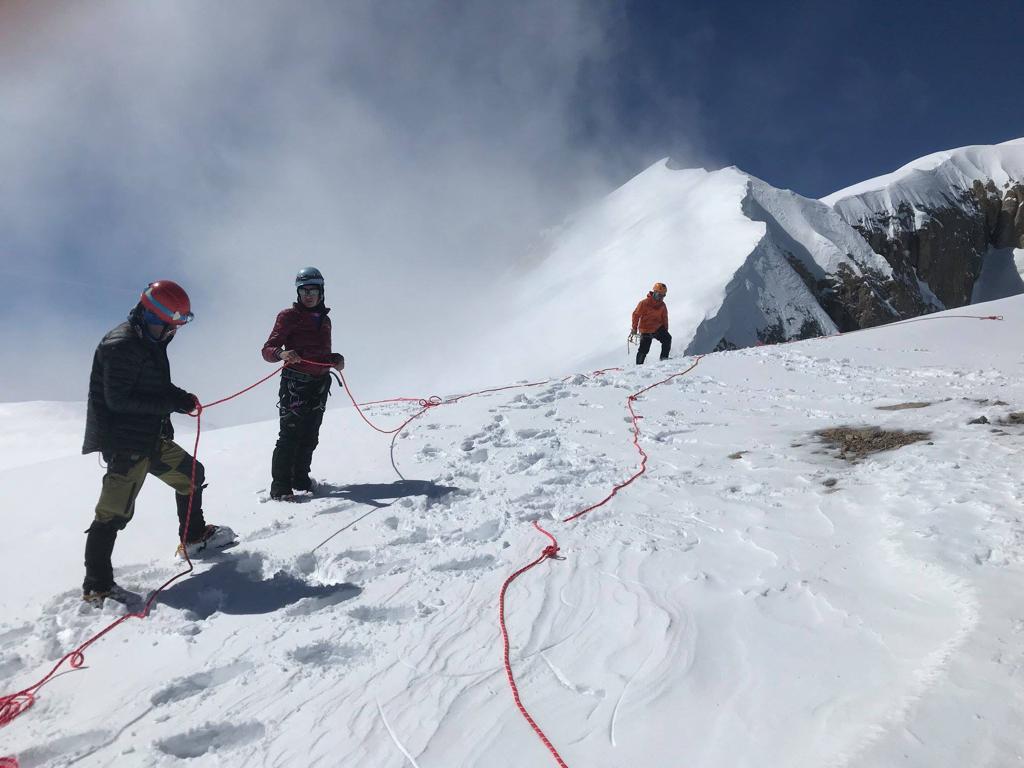
If you’ve watched the movie Everest, you’ll remember that breaking point in the second half when the massive dark clouds arrive and tension suddenly explodes. That was exactly how it started for us. The dense fog that enveloped us suddenly reduced visibility to 30–40 meters, and in places plunged us into complete whiteout uncertainty.
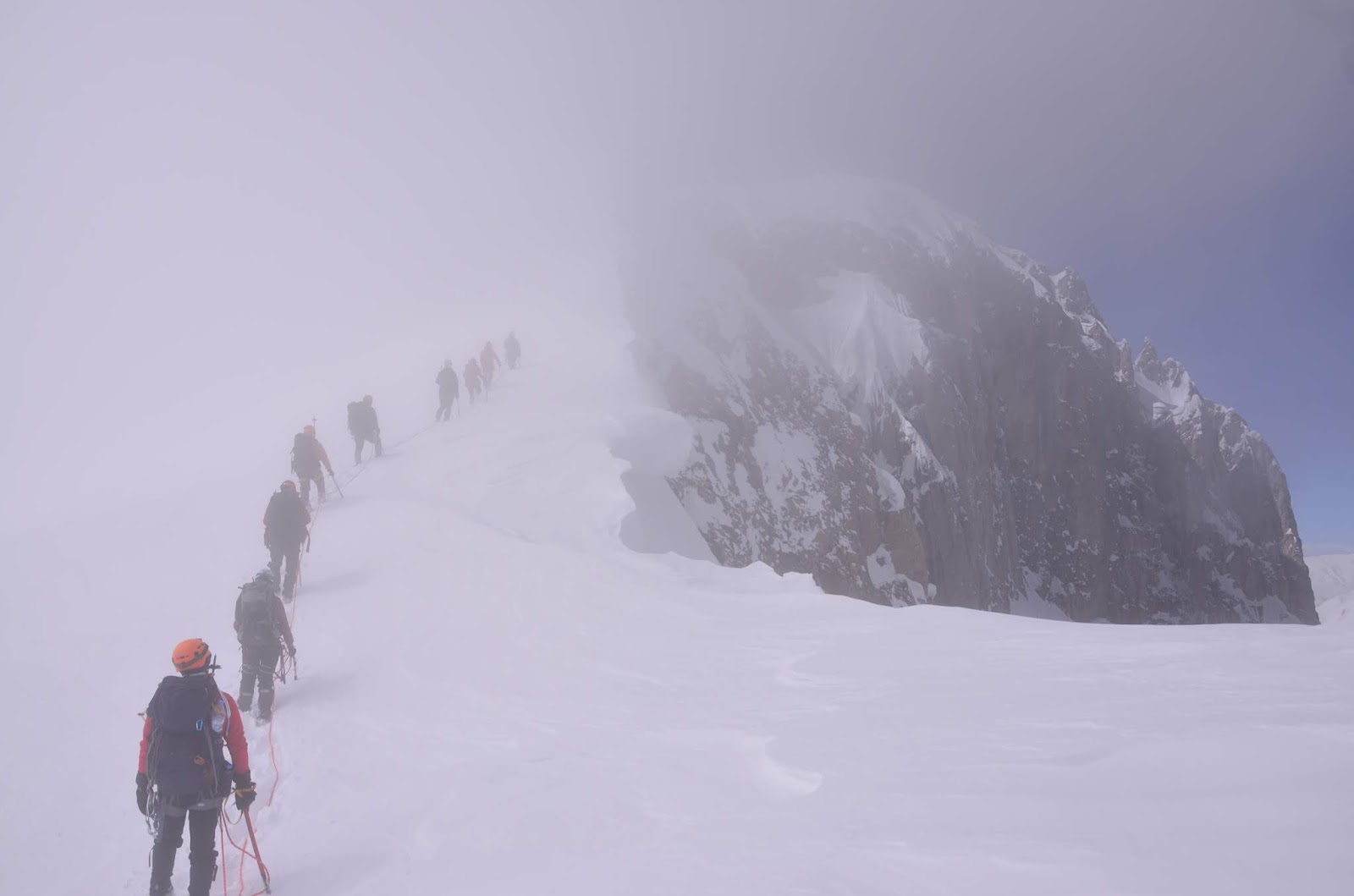
The Crack, the Abyss, and the Terrible Question: “Should I Unhook?”
We had barely taken a few steps after standing up when that sharp, deep-seated crack of the snowpack tore through the air. With a short earthquake-like jolt, the massive snow mass on the slope slid toward the abyss with a tremendous roar. The two women friends at the very front of our ten-person team — positioned on the north-facing side — plunged into the abyss as the cornice gave way. We all screamed and jumped left, plunging our ice axes into the snow. When the sliding stopped, no one moved. I felt like I was on a movie set. But this was real.
Someone yelled, ‘Fell!’ Then another voice, higher-pitched: ‘They fell!’ Everyone was shouting at once, but the words overlapped, losing all meaning. No one dared approach the cliff edge out of sheer fear. We couldn’t tell which part of the cornice—stretching out as a flat white sheet—was solid ground and which was empty air. We were trembling with the fear that another break might occur, sending us all hurtling down together. There it was—that fine line between life and death. White from below, blue from above. Just two steps away from me. We had always walked along that line, but now we were inside it. Inside it, beyond it, right in between.
Were they still there, or had they let themselves go into the endless void? Like everyone else, I stayed frozen in place, holding my breath, trying to understand what had happened. I lifted my head and looked around. Who was missing? The snow could set another trap at any moment. I held my breath. We were alert like soldiers waiting for the next move in their position — except this time our enemy was invisible; it was the white silence beneath us.
There was slight tension on the rope, but we weren’t sure. It wasn’t like checking the weight on the end of a fishing line; it was like trying to feel the heartbeat beating at the end of that rope. In that terrifying moment right after the initial shock and shouting, a sudden silence gripped everyone. The silence was broken by faint, wind-shattered meaningless sounds coming from below. Those incomprehensible syllables were the only proof they were still alive.
Sönmez’s sharp command ‘Quiet!’ cut through the chaos. In the mountain’s deafening silence, he called down: ‘Are you okay?’ The replies came back muffled and distant — voices from a place where the rope disappeared into white emptiness, where their ice axes and backpacks had already surrendered to the void. Their shouts reached us only as broken fragments carried by the wind. I thought about how I would feel in their position. Does a person watch their life flash before their eyes like a film reel, or feel the pain of unfinished dreams and unlived loves in their chest? I don’t know… But each of those seconds felt as heavy and long as a lifetime.
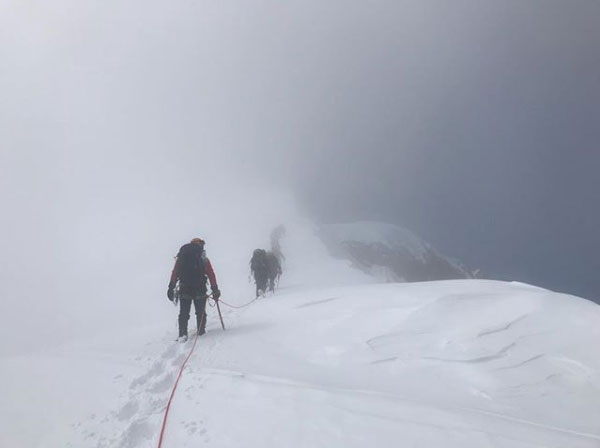
In the midst of that chaos, Sönmez acted with professional calm. He drove his ice axe deep into the snow and began building a solid anchor. He transferred the terrifying load on the rope to the anchor, secured the entire system, and finally unclipped himself from the rope team. Right behind him, Recep Abi (Kulaber) lay face-down on the edge of the abyss; the taut rope running across his throat had become a merciless vise, making it difficult for him to breathe. Once freed from the load by the anchor, Sönmez moved carefully along the line to the edge and made the first critical contact with those hanging below.
At that exact moment, still in shock and under the influence of adrenaline, the friend in front of me asked twice, “Should I unclip?” He had a plan in mind to do something with his own ATC device, but on that steep slope, unclipping would transfer the load to the rest of us. We didn’t know if we could hold the weight if a second person left the rope. So we all shouted “No!” with icy determination, and he hesitated. I, right behind him, was burning to ease the deadly tension on Recep Abi’s throat, but with every muscle tensed like a statue, I waited — knowing that the slightest movement on the rope could send those below into the void.
On Sönmez’s command, we slowly crawled left. These small movements brought our hanging friends a little closer to the slope. Now we could hear their voices clearly. We lowered a helper rope with a carabiner on the end into the void. The first two attempts failed as the wind blew the rope away…
It was in those very seconds that I witnessed the most shattering and purest side of the human spirit. The friend hanging on the edge of death asked the hair-raising question: “Should I unclip from the main rope” That meant letting herself go into a hundreds-of-meters-deep void. What seemed irrational to us at that moment was actually an epic act of sacrifice: She had realized the main rope was jammed on the cornice and that both of them couldn’t be pulled up together, so she was ready to give her own life so the other could live. It was the moment when the selfish instinct inside a person gave way to heroism in seconds. Of course, we did not allow it.
Finally, in one of the later attempts, she caught the helper rope, clipped it to her harness, and unclipped from the main rope. The first hand rising from the dark silence of the abyss appeared like the most powerful and magnificent crescendo of a grand symphony. We all stood in silent prayer for our friends to rise complete from those depths.
Seeing them back in daylight, alive and beside us, created an immense relief that squeezed our chests. The first moment when the friends who had returned from the brink of death embraced each other was an instant where words failed — only sobs and tightly clasped hands spoke. What we felt in that moment was far beyond fancy words: Someone was crying, but laughing too. Sönmez’s hand was trembling; he still hadn’t let go of his ice axe. Recep Abi collapsed to the ground, covering his face with his hands. No one was speaking, yet everyone was touching one another—a shoulder, an arm, a back… In that moment, touch was the only language that could speak. That day, we had not only pulled two lives but also our team’s shattered spirit back from the edge of the abyss. We had no physical wounds, but our souls were deeply shaken by the crack of that cornice.
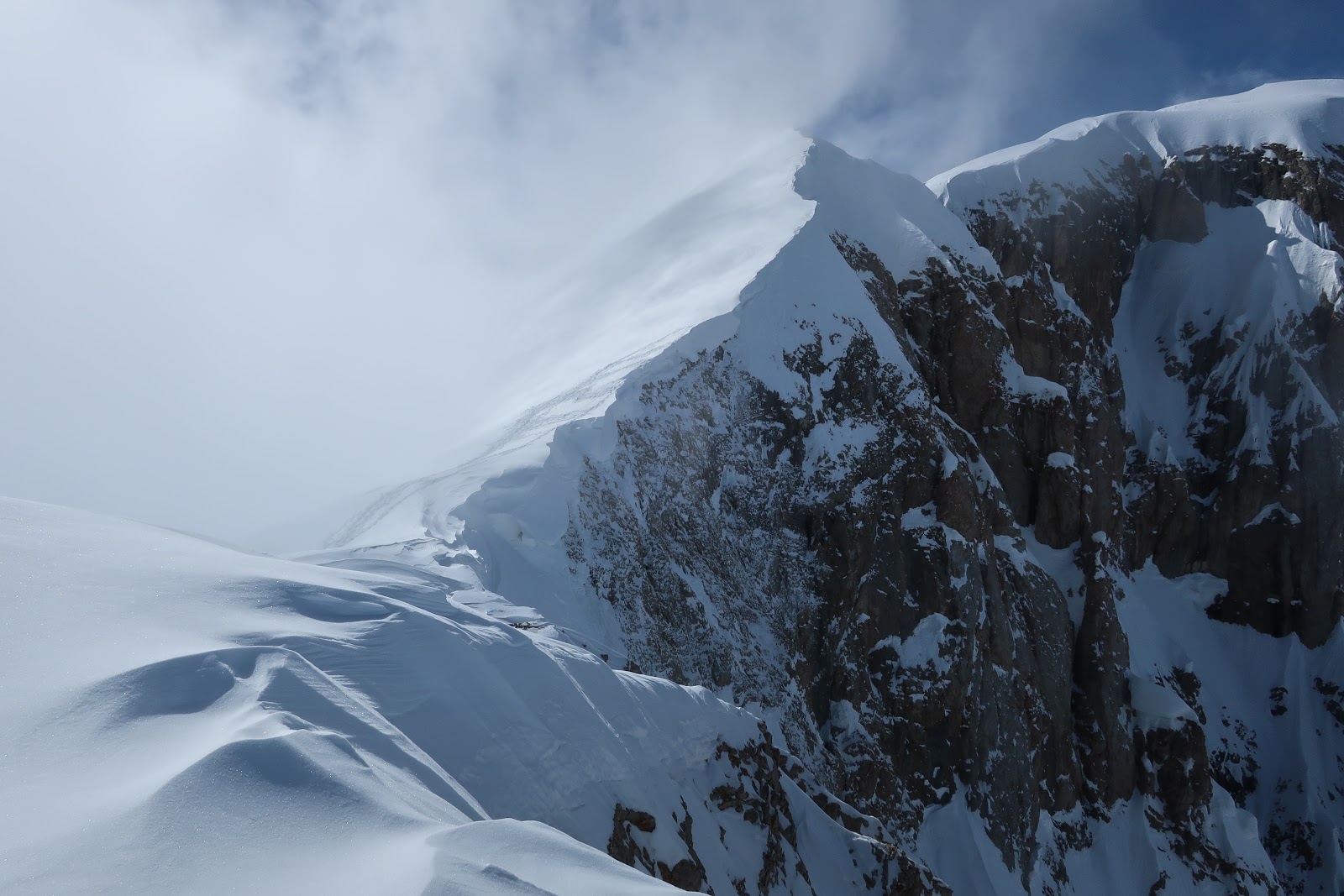
The Greatest Courage: Turning Back
After the incident, we sat in a circle on the snow. Everyone’s opinion was asked one by one. Some of us said we had worked hard to reach this point and that we could continue. They weren’t entirely wrong; for a reader who has never been mountaineering, the logic behind that insistence is hard to understand.
The cost of every attempt: Preparation for this expedition begins months in advance — conditioning training, acclimatization climbs to gradually adapt the body to high altitude, time off work, official permits, plane tickets, equipment renewal… On top of all that come material and logistics costs. For a winter climb like Cilo, the per-person expense can strain the monthly budget of a middle-class family. As you approach the summit, with every new meter climbing toward the sky, the costs climb at the same pace. Moreover, despite all this effort, the weather may not cooperate, permits may not come through, or the team may not form completely. How many times in a mountaineer’s life can all these conditions align at once?
As we sat within that circle, debating the question ‘to continue or to turn back?’, the calculation in everyone’s mind wasn’t just about today’s risk. Months of preparation, money spent, permits secured, lives put on hold… All of these formed an invisible weight that whispered ‘one more step’ at the edge of the cornice. This is what they call ‘summit fever’; that dangerous sensation just 135 meters below the peak, where everything you’ve invested calls you back. It is in these moments that the ‘no turning back now’ psychology takes over. And that is exactly why the decision to turn back requires far more courage than the decision to climb on.
Yet ahead of us lay a ridge where the same event could happen again and again. The route ahead gave no clue whether the next step would land on solid rock or a snow cornice hanging over emptiness. White can be as beautiful as it is deadly. Reşko, which means “Black Mountain,” was calling us dressed in a pure white shroud — but the price of that invitation could be very heavy.
Most of our physical and mental strength had been spent on the rescue mission. With our food stocks running low and our morale wavering, we couldn’t afford to wait even one more day. We understood then that you can’t negotiate with the mountain. The expenses, the lost time off, and the exhausted muscles were irrelevant if we were to return home with a single member missing. We decided by majority to call off the ascent. We knew the mountain wasn’t going anywhere; it would remain there in all its glory, waiting for us to return stronger during a future winter season.
Was Roping Up a Lifesaver or a Disaster?
Every decision made on the mountain sets the bill for the next step; sometimes a move that seems “wrong” can prevent a much greater catastrophe. Now let’s turn the spotlight on ourselves:
A reader from the mountaineering community could, of course, criticize our decision to rope up from a technical perspective. But there are two sides to the coin: If we had been moving in small groups of only 3–4 people at that moment, when the cornice broke, 1–2 people probably couldn’t have held the two who fell, and the entire 3–4 person group would have been dragged into the abyss together. On the other hand, tying too many climbers to the same rope could have created an uncontrollable mass and increased the scale of the disaster. This is a razor’s-edge decision that must be considered carefully on every climb.
In our case, deliberately placing the lighter members at the front and spacing them out was a conscious and vital choice. If heavier climbers had been at the front, the momentum created during the fall could have pulled all of us into the abyss. Having lighter people lead was the right strategy that allowed us to manage the rope tension and the impact of the fall.
However, there is one point where we must criticize ourselves: Having the entire team drop to the ground at the same time for a fall practice in that critical section was a risky decision. Concentrating the static load at a single point may have weakened the snow mass and triggered the break; this practice should have been done in a much safer area. Still, nature has a strange mathematics: Perhaps it was “lucky” that the break happened during the ascent. If the mass had broken while we were descending on the same tired tracks after summiting, our reaction time would have been much shorter and we could have faced an impossible situation.
Another critical factor was the deceptive atmosphere created by the fog. In mountaineering, we all know that fog means ‘stop’; however, the Cilo summit ridge didn’t present us with a stable cloud of mist, but rather a constantly shifting game. The ‘white darkness’ would roll in instantly, reducing visibility to zero, only to disperse a few minutes later as if it had never been there, clearing the path. This volatile and erratic weather may have caused us to inadvertently approach that deadly edge of the slope, the very heart of the cornice. The instability of the fog paralyzed our sense of direction, leaving us unable to distinguish the fine line between solid ground and the void of the cornice.
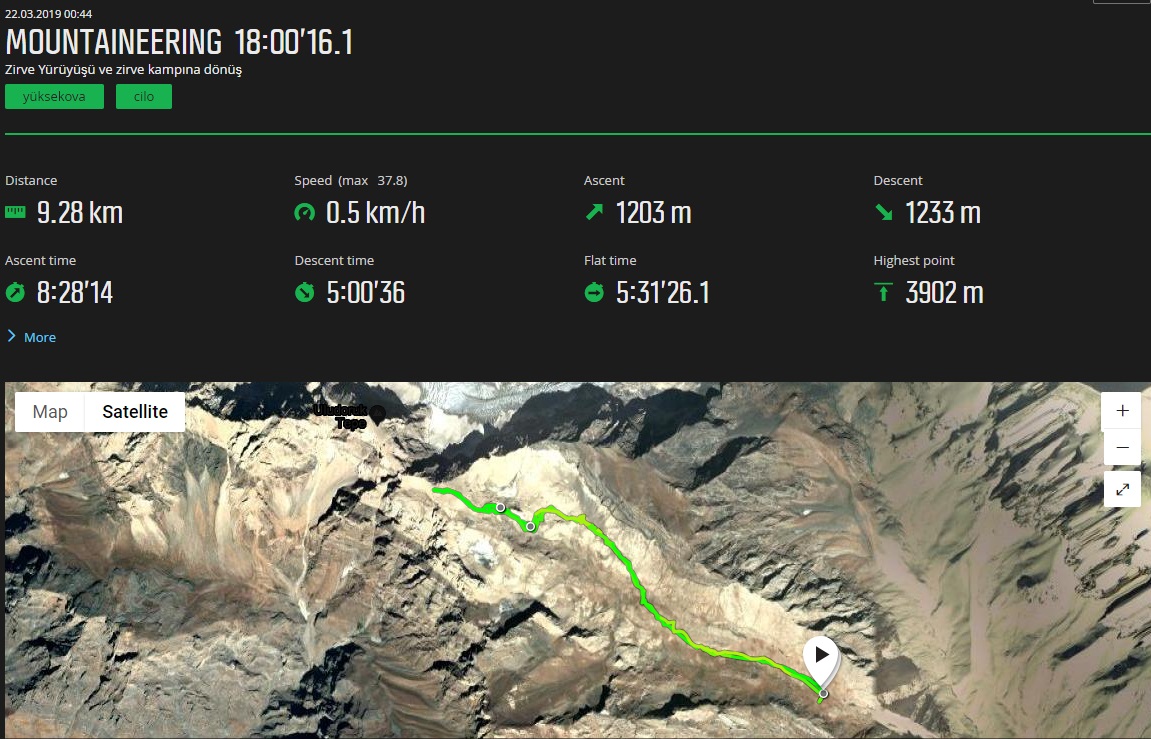
Leaving behind the impenetrable veil of mist that had come between us and the summit, we began our descent toward the camp, following our own footsteps. With every stride, the weight of exhaustion grew heavier, and the impact of the difficult decision we had just made resonated in our silence. We had been on our feet and on the move for 18 hours; this had taken a significant physical toll on us.
When we finally reached the high camp, it felt as though the mountain had settled its score with us for the day. We retreated into our tents for a period of deep silence and rest. Yet, that night’s repose was less about recovering from the climb and more like a preparation for the unexpected turn of events awaiting us in the morning—a process that would completely alter our plans.
Day 5:
The Value of a Cup of Hot Tea
The next morning, we woke up with the joy of being alive and seeing the first rays of sunlight again. Two different moods prevailed in the camp: the rush of two friends trying to catch their evening flight, and our desire to savor the moment and descend at a relaxed pace.
We tried to convince them, saying “You can’t make it in this exhaustion, don’t take the risk, go tomorrow,” but work responsibilities weighed heavily; they were impatient to set off as soon as possible. After discussions, Sönmez finally allowed them to leave. While they rapidly lost elevation, the rest of us in camp enjoyed that unique breakfast and the pleasure of steaming hot tea.
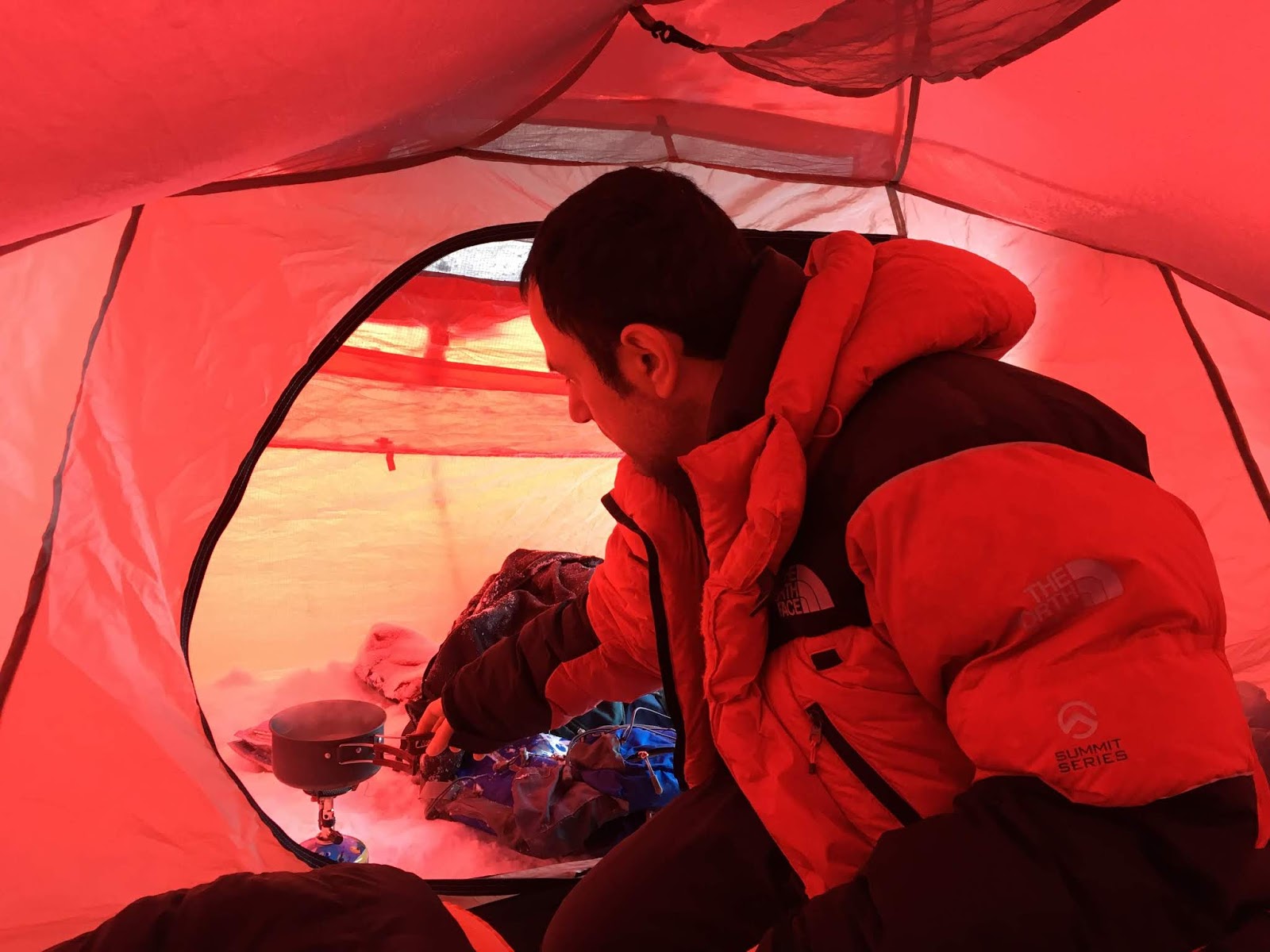
A simple cup of tea that seems ordinary in the city becomes the first warmth spreading through your body after a freezing night on the mountain; its value cannot be expressed in words. Without rushing, we absorbed that peace while listening to the mountain’s silence.
The Giant Tracks We Encountered on the Snowy Path
Half an hour after packing up camp and setting off following breakfast, we came across a sight that froze everyone’s steps. Right on top of the fresh tracks we had broken, there was a massive bear paw print deeply embedded in the snow.
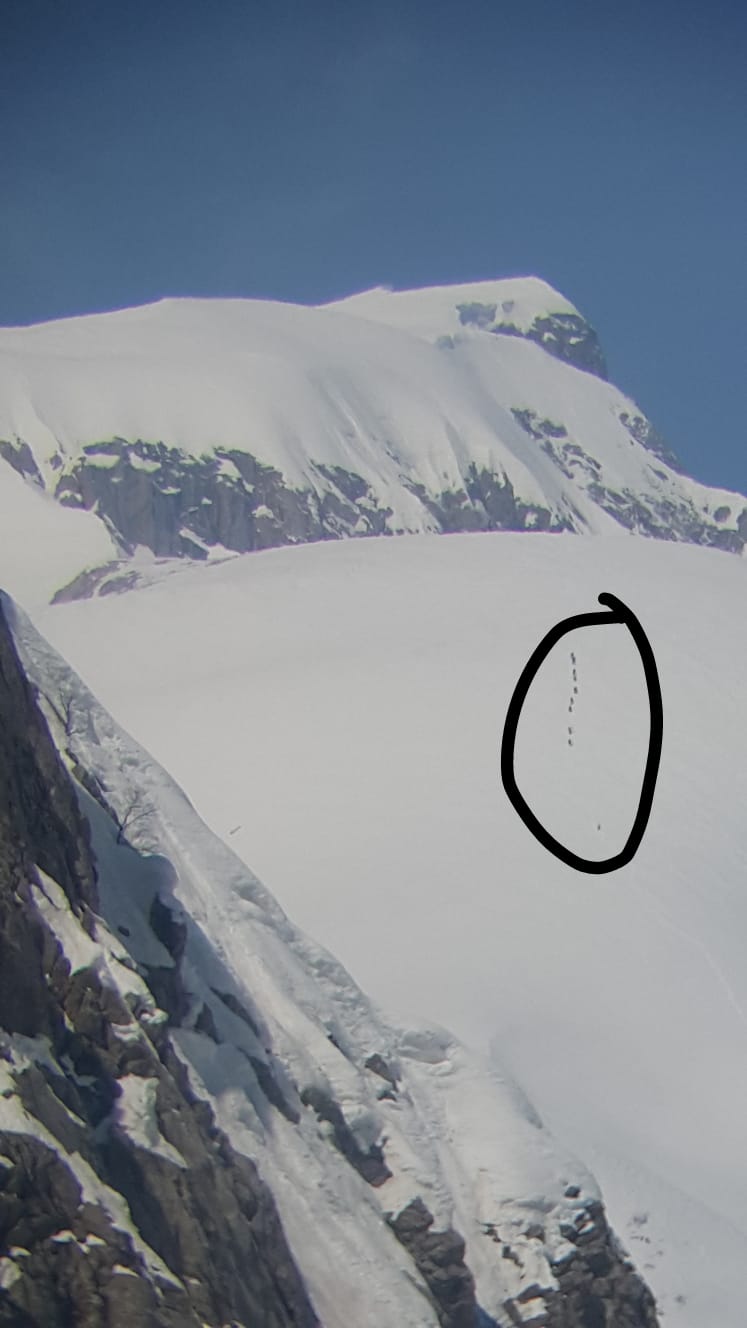
At that exact moment, the tiny silhouette we had spotted in the distance during the first days of the climb flashed through my mind like a bolt of lightning. Back at the base of the mountain, we had noticed something moving like a tiny dot in the middle of the vast whiteness and casually dismissed it, thinking, “It’s probably just a wolf.” Granted, I say that as if running into a pack of wolves in the dead of winter isn’t dangerous at all—but in that moment, out of sheer wishful thinking, we preferred the idea of a wolf over a bear, not even wanting to entertain the thought of the latter. But now, these massive paw prints staring right back at us were throwing the true identity of that mysterious dot right in our faces.
This majestic creature, which should have been hibernating, was clearly suffering from sleep issues and had passed right along the same route we were walking. The sheer size of the tracks gave a chilling hint of just how massive its owner was. My eyes instinctively searched for smaller prints beside those enormous paw marks; because if there was one thing more dangerous in the wild than a sleep-deprived bear, it was a sleep-deprived mother protecting her cubs.
I silently thought to myself, I hope we don’t run into it. After all, a sleep-deprived mother guarding her young meant unpredictable rage. Fortunately, the tracks belonged to a single individual and moved in a fairly steady, orderly line. This reassured us that our friends who had gone ahead hadn’t had any unpleasant encounter with the bear either.
After the life-and-death struggle we faced with the cornice collapse just the night before, nature had once again reminded us who the true masters of this landscape are and that we are merely temporary guests. Up until that moment, we thought the mountain had exhausted all its surprises and we didn’t expect any further danger; however, those fresh tracks proved that the mountain’s surprises were far from over.
Helicopter Operation: In the Middle of a Storm
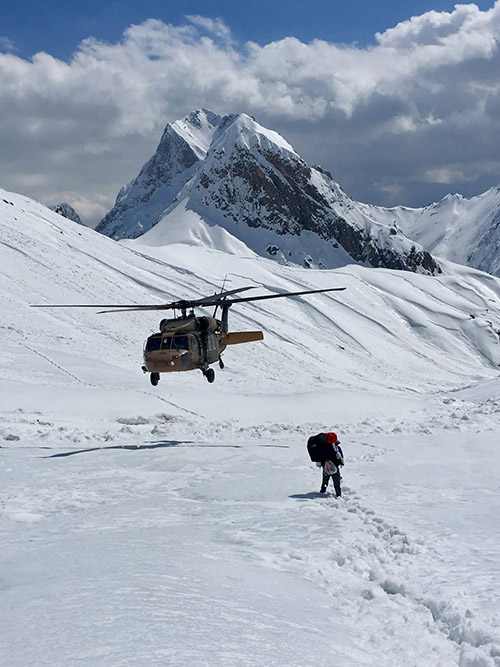
As we approached the site of our first camp, we heard the sound of a helicopter in the distance. It passed overhead and began circling us. We assumed it was a routine security patrol flight. Usually when you see a helicopter you wave, but we warned each other not to make any hand signals to avoid misunderstanding. When it started descending near us, we looked at each other curiously and cautiously approached the helicopter.
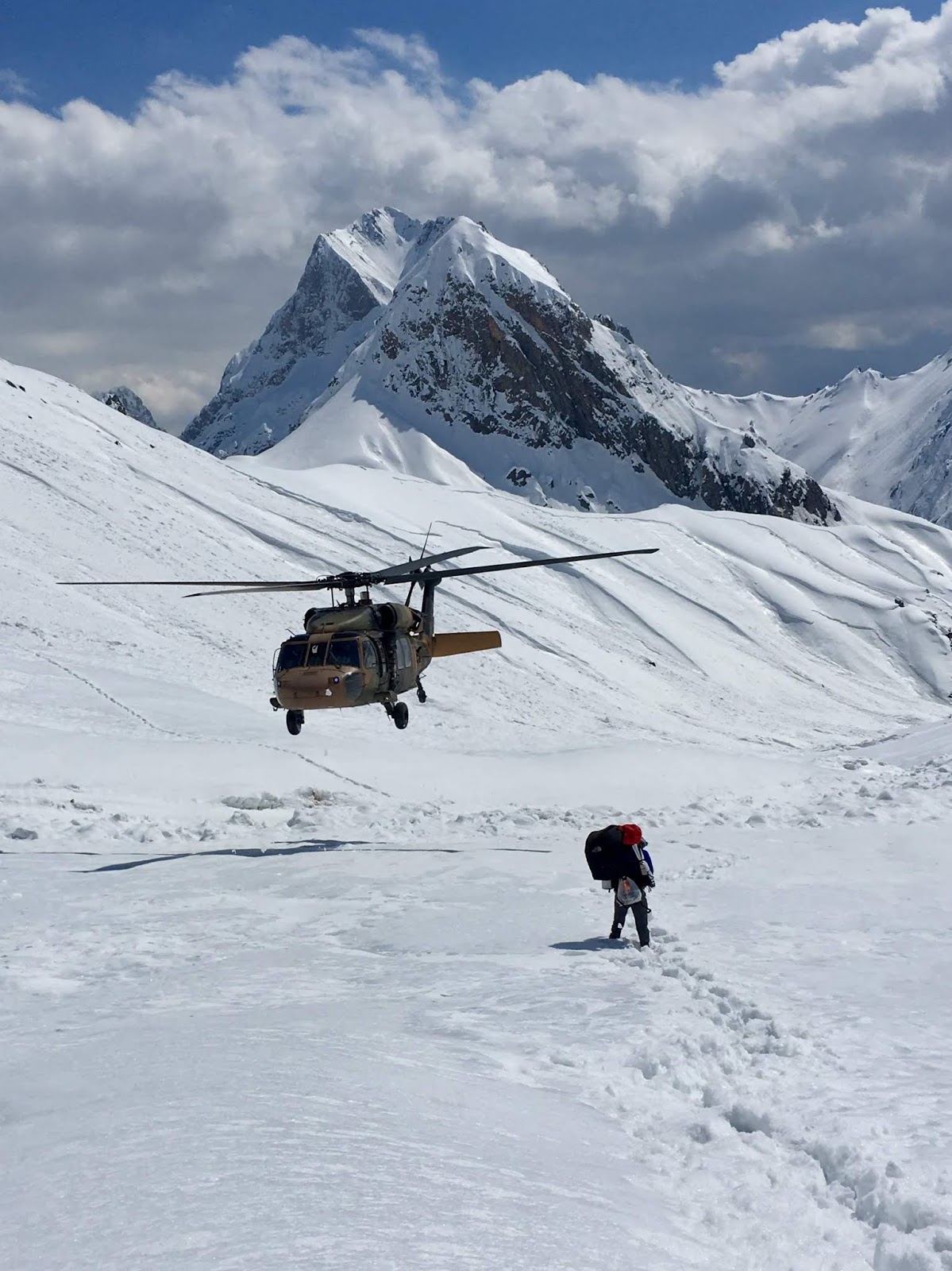
The wind generated by the rotors was so strong it was hard to stay on our feet. Once on board, we learned they had come for us. The soldiers, who had been monitoring our movements moment by moment, had noticed that part of the team had moved ahead quickly. Unable to reach us by radio, they had taken off immediately in case something had gone wrong in the freezing mountain conditions. At that moment we realized that while we thought we were alone in the mountain’s solitude, protective eyes had always been on us.
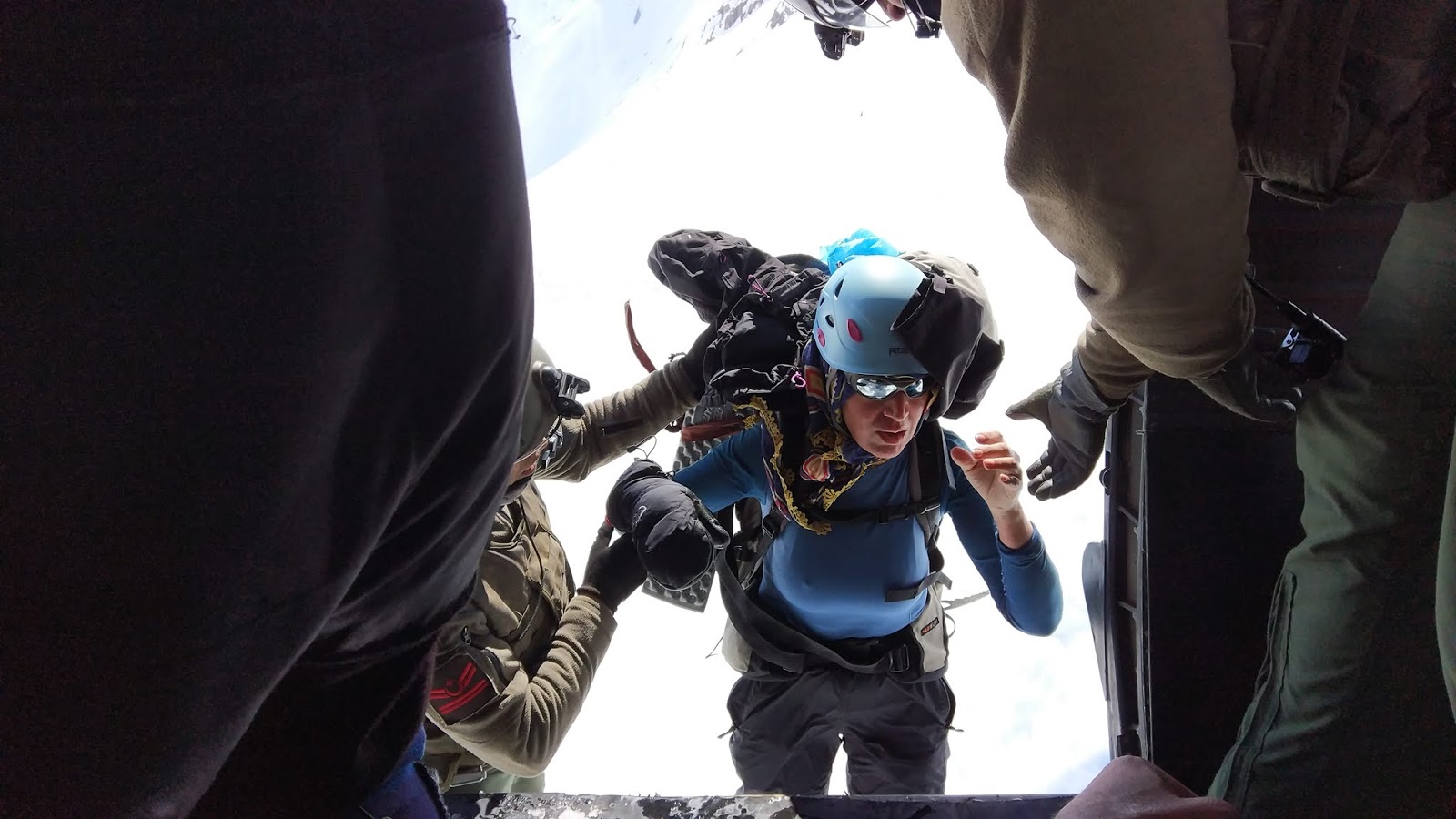
We boarded the helicopter that had reached the area in a short time and took off. After about a 15-minute flight, we landed at a military post built on a high slope. But our minds were on the tents and technical gear we had left at the main camp. While the team waited safely at the post, Sönmez and I stayed on the helicopter to evacuate the gear. When we returned to the main camp, a difficult scene awaited us; there was no flat area where the helicopter could land fully. The pilot descended to within 2–3 meters of the ground, and we ran into the artificial blizzard created by the rotors to dismantle the tents.
We had three Husky brand tents waiting for us at the camp. My trusty old Husky, which I had used faithfully for years, had lost its “swagger” in the face of the artificial storm generated by the helicopter rotors, with winds of at least 80 km/h. I had seen many harsh weather conditions in nature before, but I was witnessing such destructive wind force for the first time. Although Husky’s rectangular and tall design normally provides great comfort, at that moment serious question marks arose in my mind about its durability in extreme storms.
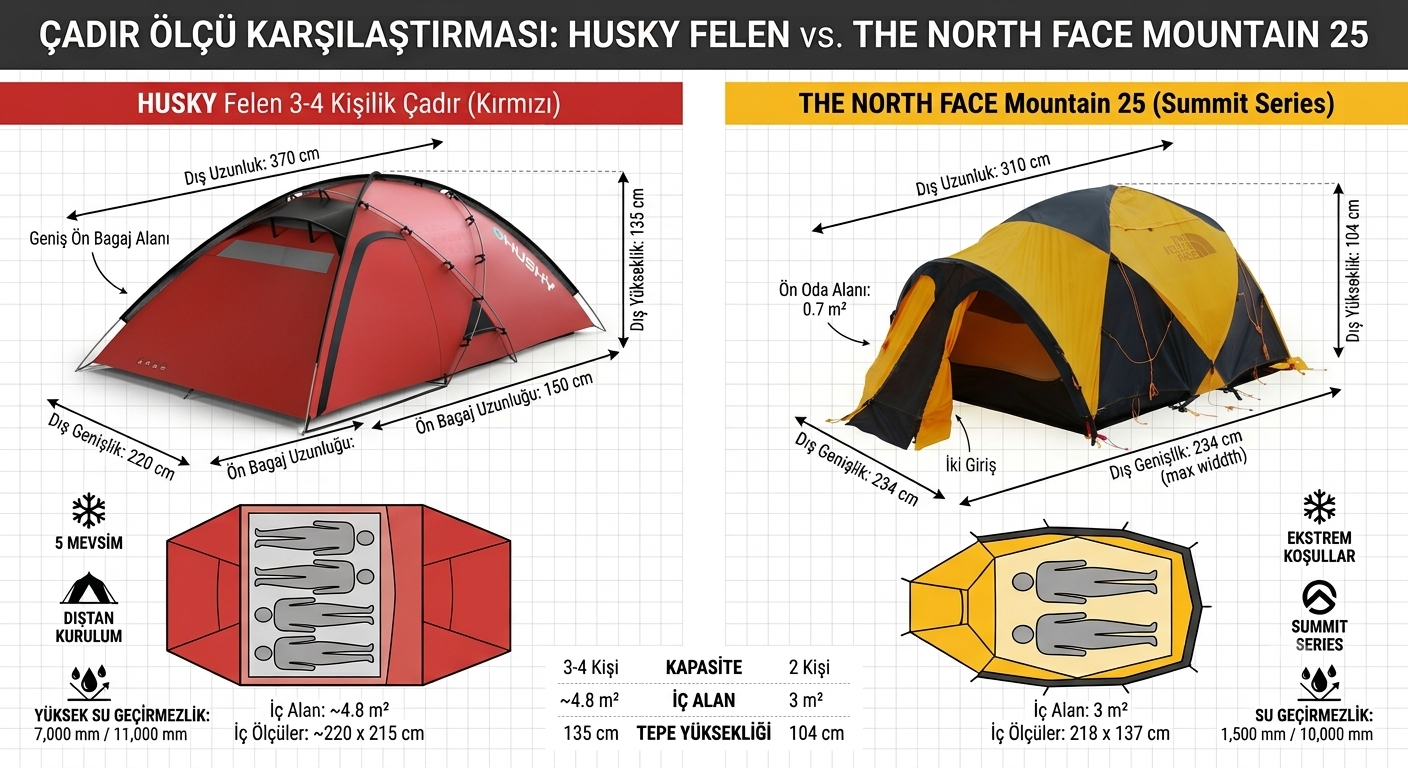
At that moment, I really wished Sönmez’s legendary dome-shaped North Face tent had been there; seeing the performance difference between the tall Husky and the low-profile “storm monster” North Face under such enormous wind load side by side would have been a unique technical lesson. But Sönmez had carried that tent to the next camp area, so we had missed the chance for that comparison.
While Sönmez and I were trying to unfasten the tent poles and pack them up, the helicopter was hovering above, searching for a suitable spot to land. Finally, as it hovered over a slightly sloped area, the crew leaned out of the windows, giving commands to the pilot just like a valet guiding a car into a tight parking spot. In those critical seconds when the wheels lightly touched the ground, we quickly loaded the gear into the running helicopter. Once everything was done, we jumped in as well and took off in a massive cloud of dust and snow.
You know those famous exaggerated stories where someone says, “I was changing magazines while jumping from one helicopter to another”… Well, at that moment I was living right in the middle of those stories — but not fiction, the real thing 🙂
When we reached the base area, we loaded our other friends onto the still-running helicopter without wasting time and took off toward Yüksekova Garrison.
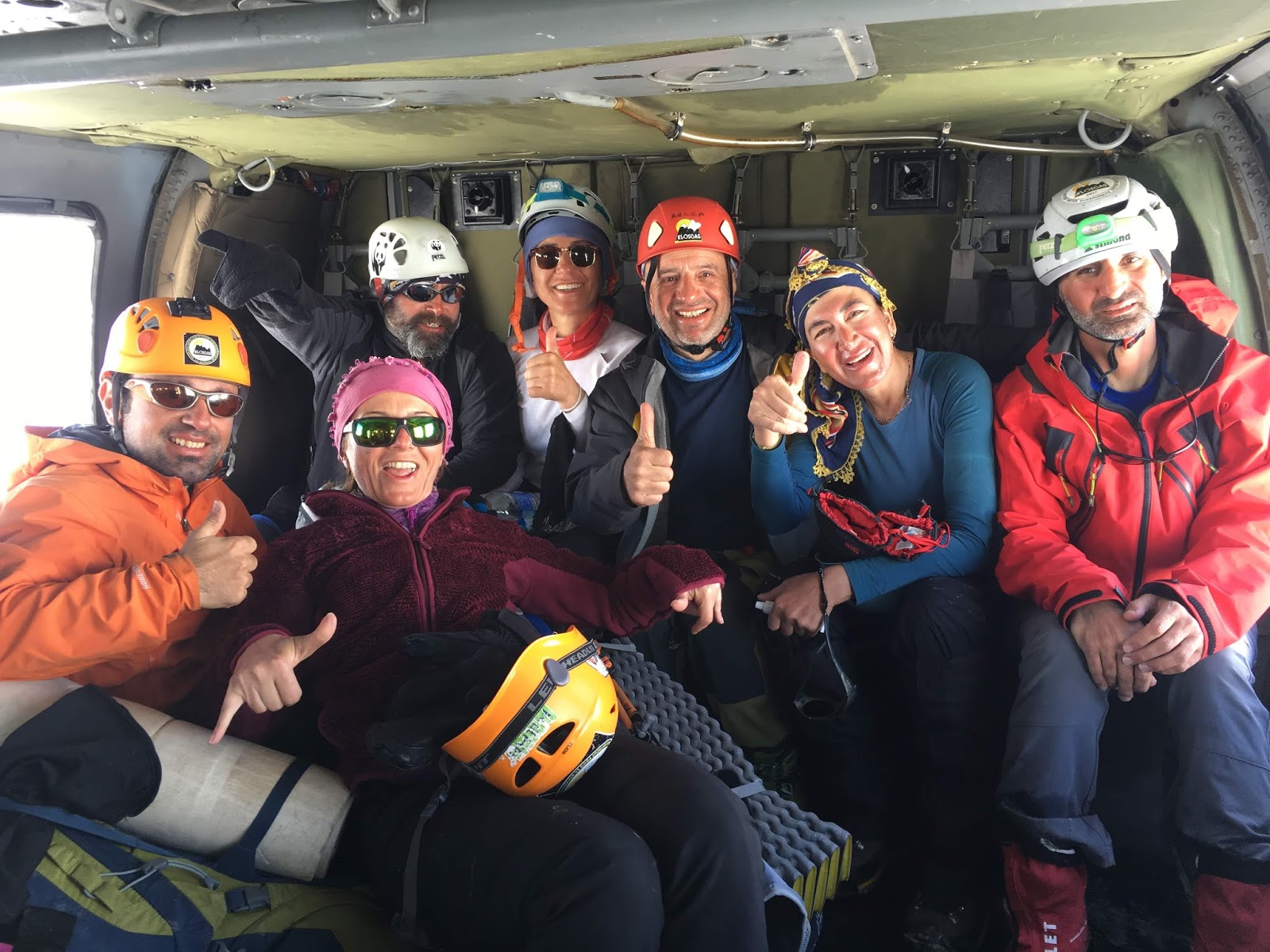
Unfortunately, we couldn’t pick up the other friends who had gone deep into the valleys during the evacuation operation. Minutes after being in the mountain environment, we were beamed into civilization, drinking tea and devouring the treats offered to us. The soldiers’ care and assistance made us happy. We had a pleasant conversation with the valuable commanders about our climb, the region’s issues, and turning the area into a winter tourism destination. We sealed this unforgettable moment with a group photo we took together.
Meanwhile, we returned to our hotel with a helicopter we called from the district center (ha ha ha, okay, back to the real world 🙂 — Up to here there hasn’t been a single fictional event, so let me end it like this… After the unique hospitality at the garrison, we left that magical atmosphere and returned to the real world — that is, to our trusty minibus that would take us to the hotel.
The ironic part was that the two friends who had gone ahead completed the entire route on foot. While we reached the town center around 14:30 in the afternoon and rested at our hotel, they still hadn’t managed to get out of the valley. They also missed their flights. They only just made it to the evening dinner we had together.
I won’t say who these unlucky friends were — perhaps you can guess from the photos (A hint: Their faces may have been more sunburned because they were exposed longer to the light reflected from the snow 🙂
Day 6:
An Ahmet Kaya Song on the White Journey
After what the mountain had done to us, what the road would do felt lighter. While most of the team flew back to Istanbul, we headed first to Van and then to Bingöl with a small group formed by Sönmez; we wanted to climb the frozen waterfall we had set our eyes on earlier.
Our entire day passed inside an intercity minibus on roads covered with a pure white blanket. While watching the frozen world through the window, Ahmet Kaya’s voice rose from the tape: “Sensiz Yaşayabilmirem…” As intense melancholy and silence filled the minibus during the next songs, Sönmez suddenly started a lively folk tune to dispel the heavy atmosphere. At first I was a bit worried — “Will the passengers be disturbed? Will there be trouble?” But Sönmez sang so sincerely and beautifully that, instead of objecting, the other passengers began listening with admiration. Some even took out their phones to record videos and went live on social media.
With Sönmez’s folk songs, the cold and distant atmosphere warmed up instantly; people who had been strangers moments before began chatting as if they were forty-year friends. There was actually a whole life hidden inside that small minibus. As the conversation deepened, everyone poured out the troubles in their hearts: some were going to visit a sick relative, others to see their spouse in prison. At that moment I understood that mountains are not made only of snow and ice, but also of human stories.
Day 7 and Beyond:
Waterfall Hunting in Bingöl
The next morning we were at the Bingöl Provincial Directorate of Youth and Sports early. With the warm welcome of the officials and our friend, the TDF Bingöl Representative, we set out on a full “waterfall hunt” in the region. With the spirit of exploration, we examined many waterfalls in the valleys we entered; but nature had its own schedule. Although the air was freezing, we realized that these crystal structures needed the harshest frosts of January and February to freeze solidly enough for climbing, and that the March sun had already softened them.
Final Words: To Those Who Heed the Mountain’s Call
This time we could not touch the summit. We could not reach Reşko’s pure white peak, nor climb Bingöl’s frozen waterfalls. But we did not return empty-handed. We returned with priceless lessons in our bags — lessons not written in books, but learned only on the mountain.
We learned that in mountaineering, the real victory is not reaching the summit, but returning safely and completely to your loved ones. Sometimes the greatest courage is being able to say “stop” at the moment you think “we can continue.” The decision we made that day at 4000 meters, face-to-face with death, was perhaps the most correct summit move of our lives.
The mountain is unforgiving; there is no room for forgetfulness, lethargy, or overconfidence. Leaving a dry pair of gloves at the bottom of your pack, delaying a critical decision with the thought of ‘I can last a bit longer,’ or drifting toward a steep slope as the mist rolls in… The price for these lapses can be devastating. We received our warning before the toll was taken. Others, however, had to face that warning in its harshest form: the sudden crack of a cornice beneath their feet.
But most importantly, we understood this: The mountain is not just a mass of snow and ice. It is also a mirror that reveals the barest state of the human soul. The sacrifice of asking “Should I unclip from the main rope?” while hanging on the edge of death, the leadership of someone who remains cool-headed after 18 hours on their feet to build an anchor, the team spirit of running into a man-made blizzard created by helicopter rotors to dismantle a tent… These are the real rewards of mountaineering.
Cilo once again showed us that even in the harshest geographies, a hot cup of tea, sincere hospitality, and a struggle shouldered together give a person indescribable strength. From the protective gaze of the soldiers, to the halay dances of the young people in Yüksekova, to the strangers in the minibus who suddenly became forty-year friends over an Ahmet Kaya song… Mountains are not just about height; they are also places where human stories meet.
If you ever choose to heed this call, carry with you an unshakable discipline, a team whose breath you can trust as your own, and a profound reverence for the wilderness. But above all, keep the will to turn back as the most vital piece of equipment in your pack.
The mountain remains, indifferent to time. Reşko stands in all its stoic majesty, awaiting our next encounter. It is our greatest hope to return one day—better equipped, more seasoned, and with an even deeper respect for the soul of the peaks.
To those who traverse Cilo’s proud whiteness with courage in their hearts and wisdom in their steps: I salute you.
Footnote 1: Our expedition was featured as a news story in various print and digital media outlets.
Footnote 2: Fujifilm has produced a beautiful film about the Cilo Mountains; if you are curious about this region, I have embedded the video below and highly recommend watching it.