06:00 AM. I’m up early. I have a packed schedule today. During the day, I’ll be headig to Ballıkayalar for some rock climbing, and in the evening, I’ll join the Republic Day march. My backpack was ready last night. I brewed my morning tea, filled my thermos, and hit the road.
Five dogs are lying in a row on the street, resting. There are many animal lovers in our neighborhood, and everyone feeds these animals individually. Well, when the conditions are good, dogs the size of motorcycles make our street their home. I pass by them cautiously because they have a habit of causing trouble depending on the size of the pack on my back. For instance, if I have my 65-liter rucksack, they never fail to bark. I guess they just don’t like big bags.
Once, I tried to ignore them and just walk past; they came from behind, grabbed my raincoat, and tore it. Today, I have my small daypack, and they are quiet. Still, one of them follows me to the end of the street. As I disappear from sight, it gives me a look as if to say, “We’re letting it slide this time, just so you know.” They’ve just never been my cup of tea. I even watched the movie Hachiko, but even that didn’t help. I am a cat person.
07:00 AM. I’m getting on the minibus that will take us to Ballıkayalar. I see a small dog inside the vehicle. “Oh boy, where did this one come from?” I think to myself. I head to the back row and sit down. Every now and then, the dog and I lock eyes, sizing each other up. When we reach Maltepe, my friend Hakan joins us.
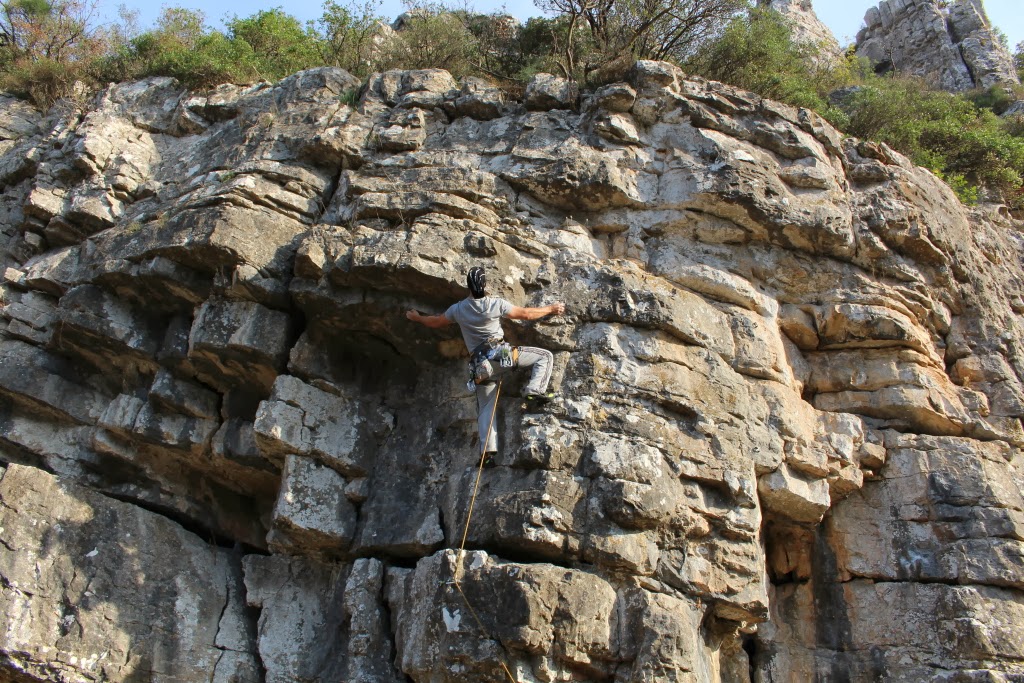
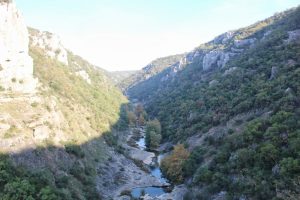
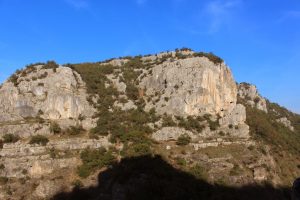
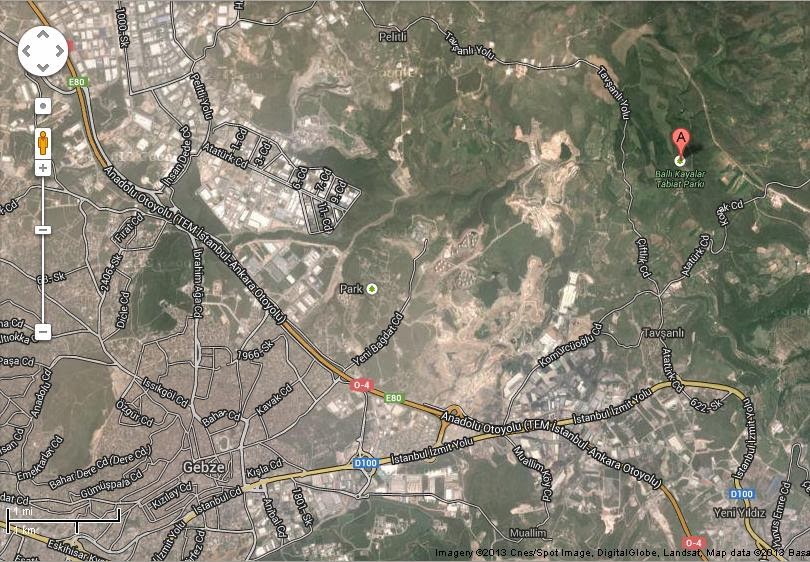
Ballıkayalar is a captivating nature park located within the boundaries of Tavşanlı Village in Gebze. Declared a National Park in 1995, this valley takes its name from a historical legend: once upon a time, bees adopted the steep caves of the valley as hives and filled them with honey (Bal means honey in Turkish). Both sides of the valley, through which a serene stream flows, are surrounded by vertical limestone walls reaching toward the sky.
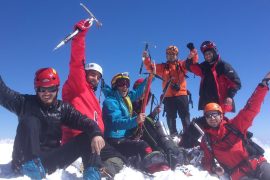
Today, we are here with a group of 19 people under the leadership of Sönmez Erkaya, an instructor and referee at the Turkish Mountaineering Federation with over 20 years of deep experience in outdoor sports. Guided by such an experienced name as Sönmez Hodja, we are ready to push our limits on the tough rocks of Ballıkayalar.
Although its proximity to Istanbul makes it a popular spot for picnickers on weekends, Ballıkayalar gains its true identity through the unique routes it offers for rock climbers. It is the cradle of modern rock climbing in Turkey and one of the most important training grounds for athletes. At the entrance, where the picnic area is located, there is a country restaurant. You can drink tea or grab a quick bite here. There aren’t many picnickers today. We are taking a breakfast break here.
We line up in a semi-circle around Sönmez Hodja. He asks us to count off from the right and remember our own number, as well as the person before and after us. It feels like a roll call during military service. The goal is to make moving as a group easier. We adapt quickly. In fact, Hakan and I, standing next to each other, even start addressing each other by our numbers.
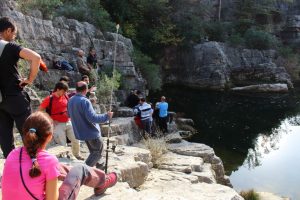
After a short walk, we stop in front of a steep rock. There is a cliff below. “No way, are we really climbing here?” I think to myself. Similar emotions can be read in the eyes of those who are here for the first time…
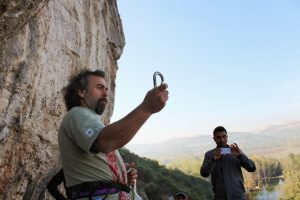
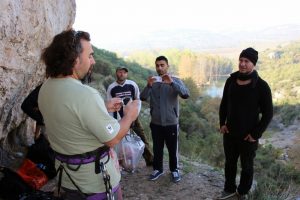
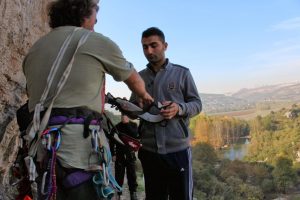
Sönmez Hodja introduces the equipment. The metal connector called a carabiner is one of the most essential pieces of gear used in mountaineering. It is used to connect the rope to an anchor point or a harness. Carabiners, produced in various models and specifications, must be resistant to heavy loads while remaining lightweight.
Sönmez Hodja says that if we drop a carabiner from a height, we must “retire” it. He explains that even if it doesn’t cause an immediate problem, invisible hairline fractures can form within the material, creating a risk of breakage in the future.
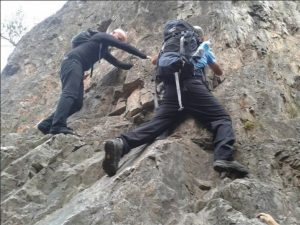
The gear the instructor is wearing on his waist and showing in his hand is called a climbing harness. He asks us to approach the rocks before putting them on. We step into them like we are putting on underwear. The importance of putting it on at the base of the rock is this: you might lose your balance and fly off the cliff while trying to put it on. Don’t say “no way”—accidents like that do happen. Nature is beautiful, but it is not very forgiving of mistakes.
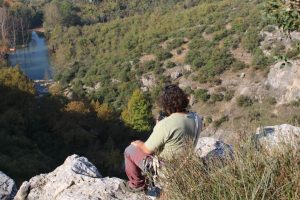
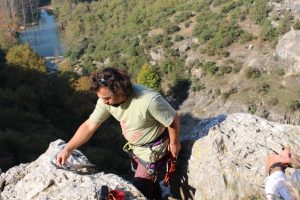
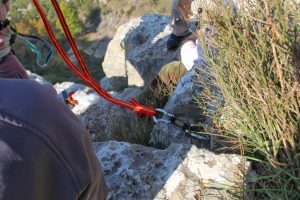
We climb to the top of the cliff with the instructor to see how a belay station is set up. Metal plates placed into holes drilled in the rock surface are called bolts. The rope tied to the waist is passed through these bolts to provide safety.
The important thing in setting up a station is to anchor from two different independent points. Two separate ropes are connected to each other, but the load is only on one of them. If a sling or carabiner fails for any reason, the other point it is connected to kicks in. Every connection has a backup.
Our instructor says, “Human life is the most precious gift we are given; it’s not like we are just throwing stones and getting tired,” and sets up yet another backup point. He takes precautions by ensuring that if the rock block where the two separate points are connected breaks, the point on the other rock block will come into play.
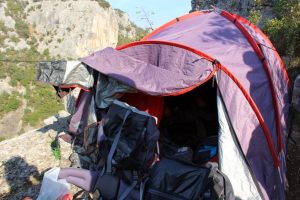
Ballıkayalar also contains suitable areas for camping. We run into some friends camping right where we set up our station. We learn that they are students from Kocaeli University.
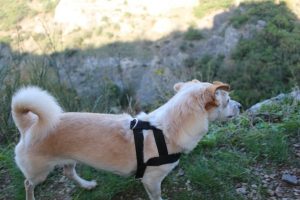
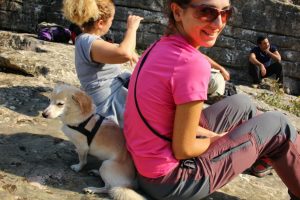
Süslü. From our first encounter on the minibus, we had some close moments throughout the day. She is a Chihuahua. Very different from street dogs. A smart, well-behaved dog.
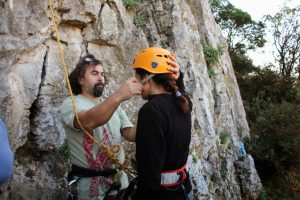
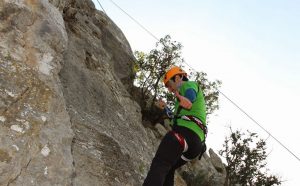
One of the most important pieces of mountaineering equipment is the helmet. It prevents us from getting injured by hitting our heads and protects us against falling rocks from above. The materials used in rock climbing are similar to those used in mountaineering. Although seen as a branch of mountaineering, rock climbing is a sport in its own right.
We realized that waiting is more stressful than actually climbing. We are like children waiting in line for vaccinations in elementary school. Feeling afraid or anxious in dangerous situations is a fundamental human emotion. Controlling this emotion is key. If it is too much, there is a tendency to make mistakes. If it is too little, the probability of success drops.
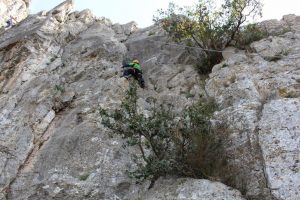
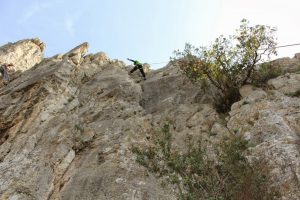
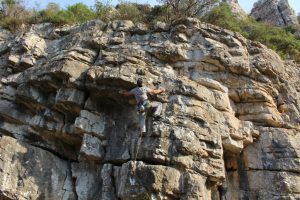
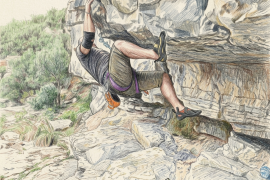
The most basic mistake beginners make in rock climbing is putting all the load on their arms. However, the essence of climbing is using your feet. If you try to pull yourself up using only your hands, your arms will “pump” in a short time due to lactic acid buildup, and your climb will be cut short. In mountaineering slang, this technique based on brute force is humorously called “laborer’s climbing” (amele tırmanışı). 🙂 Remember; the rope doesn’t make you climb; it is only there to save your life in the event of a possible fall.
Toward the end of the route, we encounter a narrow section resembling a chimney, considered the “crux” (the hardest point) of the climb. This is both a physical and strategic testing ground. Trying to bury yourself inside the chimney and climb through it usually results in getting stuck. The correct technique is to spread your legs like a compass, keep your torso on the outside, and advance with left and right maneuvers.
Golden Rule of Climbing: Climbing is 25% physical strength and 75% mental preparation.
I have an interesting observation: those who say “I can’t pass this” in their minds usually give up at the crux, even when they are physically at their strongest. Physical attributes only help to a certain extent on the rock; the real climb begins when those imaginary barriers in the mind are overcome. When you learn to harmonize with the wall instead of stubborn resistance, routes that seemed impossible open up one by one.
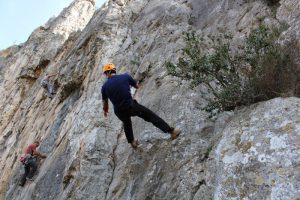
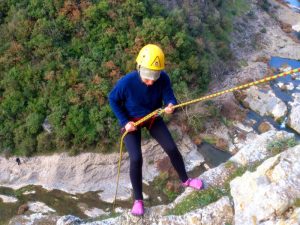
Heyoooo! Heyoooo! Our victory cries upon reaching the highest point of the route echo through the depths of the valley. As much as ascending is a technical skill, descending is a matter of discipline. The most common mistake during descent is bending the knees out of fear. Sönmez Hodja is uncompromising on this: he wants you to surrender yourself to the rope with your arms open to the sides without touching the rock, your feet shoulder-width apart, and your knees locked straight.
Sönmez Hodja’s famous words ring in our ears: “This job starts with trusting the equipment.” If you don’t fully trust the safety system, your body tenses up, and instead of a fluid descent, you exhibit the forced effort of someone who is paralyzed by fear. When you finally step on the ground, your hands and feet tremble uncontrollably from the adrenaline. This trembling is actually the harbinger of an addiction; at that very second, you start planning for the next route.
Climbing is not just a physical workout; it is a mental meditation that works all muscle groups and takes your daily problem-solving skills to the summit.
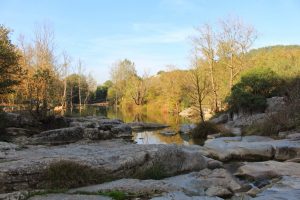
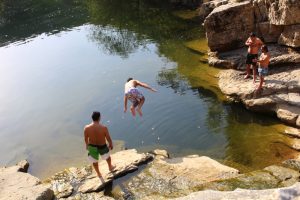
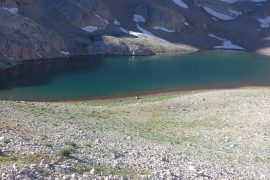
After completing the first routes, we advance through the valley and reach the famous large lake where we’ll take a swimming break. We encounter someone fishing, even though it’s forbidden in the park; clearly, the inspections are not yet at a deterrent level.
As everyone collapses into a shady spot from exhaustion, Süslü—the joy of our team—has already found herself a cool corner.
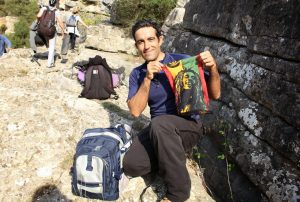
My colleague Hakan is a true buff (bandana) enthusiast. He proudly shows off his newly purchased model.
The freezing cold of the water is no obstacle for us; we shake off the day’s fatigue with various jumping attempts.
After the enjoyment of swimming, we begin preparations for our second climbing route.
Nearly a hundred climbing routes of various difficulty levels have been established in Ballıkayalar since the 1970s.
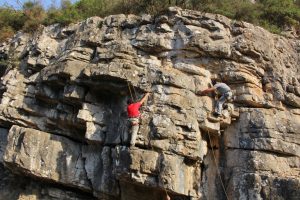
We witness an interesting dialogue on the second route. A climber in a red t-shirt is in a total “survival” dialogue with Rüstem, a friend he just met who is belaying him:
— “Rüstem, my life is in your hands, please be careful!”
— “Rüstem dear, keep the rope tight, move it a bit to the right…”
He turns to the supportive messages from the crowd and asks that unforgettable question: “
My life is in someone else’s hands, how can I be relaxed?” The calming response from behind summarizes the dark humor of the climbing community: “
You just met your belayer, you have no bad past memories together. There couldn’t be a better reason to trust, keep going!” 🙂
Rappelling into the valley… A thrilling surprise awaits those descending here. Let’s just say it’s better experienced than explained. During the descent, one of our friends got stuck right in the middle of the rope because his Prusik knot jammed. An exciting test awaited those waiting below, and a difficult one for the person above. Sönmez Hodja, letting his experience speak, immediately set up a side line, reached him, and cut the jammed rope with a knife to ensure his safe descent. Once again, we saw firsthand why training and quick decision-making are vital in mountaineering.
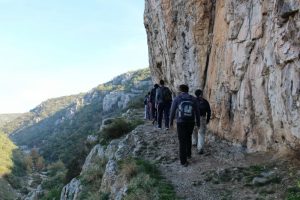
Having successfully completed the climbs, we head back. Although the walking route inside the valley is about 2 kilometers, it’s not exactly “easy” due to the terrain. On this medium-high difficulty track, rocks that get wet—especially after rain—pose a serious risk of falling. Therefore, even if we are on a flat path, it’s best not to take off our helmets against the risk of falling and hitting our heads.
The most exciting part of the road was a steep rock where we had to do a traverse. While an ice-cold pond awaited us below, the ground was as slippery as soap. Unable to trust the grip of my shoes, I found the solution by taking them off and crossing barefoot. While Sönmez Hodja immortalized that moment, I was deep in a conversation with my inner fear, thinking about the possibility of the electronics in my backpack meeting that cold water. 🙂
On the way back by minibus, Sönmez Hodja asked us all for a summary of the day. On everyone’s face, beyond exhaustion, there was the peace of having had a wonderful day and an eagerness for the next route.
Istanbul’s “Crux” Route: Beşiktaş Traffic
I got off the vehicle in Mecidiyeköy and jumped into an empty taxi. It didn’t take long for me to realize that I had created a “cold shower effect” on the driver’s face when I told him where I was going:
— “Beşiktaş…”
The taxi driver was both steering and explaining, unable to believe this coincidence:
“My previous passenger was also going to Beşiktaş! He couldn’t stand the traffic and got out; now he’s taking the Metro to Taksim and will walk down from there…”
While I thought to myself, “It was your destiny to go to Beşiktaş tonight, my friend :)”, I innocently opened the subject by asking, “Is the traffic that bad?” The taxi driver was a troubled but gentlemanly person, and we began to chat patiently. This is Istanbul traffic; it made us complete a normally 10-minute journey in exactly one hour.
I was only able to reach Beşiktaş at 09:30 PM. I wish there was a bicycle rental service between Büyükdere-Zincirlikuyu-Beşiktaş; I would have “zoomed” downhill and arrived long ago. Unfortunately, I couldn’t make it to the torchlight Republic Day march. Never mind, maybe next year…